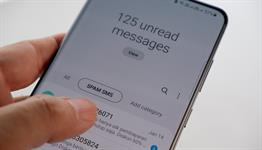
Global research proves SMS marketing is six times more effective than email, but the wave of spam in Indonesia threatens the future of this communication channel.
June 10 2025
SMS marketing has the potential to be a game changer thanks to its direct reach to consumers’ cell phones and high click-through rates. However, the recent wave of spam that has hit the inboxes of Indonesian users is threatening the reputation of this proven effective marketing channel. So, how should brands respond to this dilemma?
Recent research has revealed that SMS, which is considered obsolete by many, has actually shown tremendous effectiveness in digital marketing.
Global Benchmark Report 2025 from Dotdigital, a UK-based digital marketing company, shows an interesting trend: while SMS usage globally declined by 19 percent, the Asia Pacific and Americas regions saw significant jumps of 53 percent and 42 percent respectively.
“SMS did not disappear, it just changed,” the report concluded.
The change is especially evident in the massive adoption of SMS as a marketing strategy. Statistics prove its prowess.
Research institute Ipsos ‘ study of SMS marketing campaigns on the Dotdigital platform revealed a conversion rate of 69 percent, with a delivery rate of 91 percent from a total of more than 500 thousand SMS sent.
Dotdigital also noted that SMS has a much strongerengagement rate than email marketing. Globally, SMS has a Click-Through Rate (CTR) six times higher than email.
The figures are derived from the analysis of tens of billions of emails and more than half a billion SMS campaigns on Dotdigital customer accounts over the 12 months from August 1, 2023 to July 31, 2024. The research covers marketing activities in more than 40 industries and several countries around the world.
Here’s a comparison of engagement rates between SMS and email according to Dotdigital:
Metrics
SMS Global
APAC SMS
Global Email
APAC Email
CTR
19%
20%
3,1%
1,9%
Unique CTR
17%
17%
1,3%
1%
Unsubscribe Rate
0,12%
0,2%
0,13%
0,13%
CTR is the percentage of recipients who click on one or more links in a marketing campaign. Unique CTR measures the percentage of recipients who clicked on a link at least once. Unsubscribe rate shows the percentage of recipients who unsubscribe after receiving a marketing campaign.
Dotdigital’s research does not include open rate figures for SMS, only email open rate (45.7 percent globally and 39.3 percent Asia Pacific). However, Sender 2023 ‘s research found SMS open rates to be 98 percent, with 90 percent of recipients opening it in less than 3 minutes.
Recently, Indonesian netizens have been complaining about the bombardment of unauthorized marketing text messages to their cell phone inboxes. Complaints mainly came from Telkomsel and Indosat Ooredoo Hutchison (IOH) customers.
One netizen on LinkedIn, for example, complained about advertising SMS dominated by online loan brands (pinjol) despite using a postpaid number. After going viral, the new provider reached out and promised to make adjustments.
Citizens on Twitter/X also complained about similar SMS attacks on the two operators, which promoted lending, banking, and insurance both with official brand labels and unknown numbers. In fact, the customer has never given consent.
Donny Oktavian Syah, Lecturer in Commercial Administration at the University of Indonesia (UI), warns of the long-term impact of this “uncontrolled” SMS marketing bombardment on brand owners and mobile operators.
“This leads to user convenience. Even though you can just delete it, some research says this is quite annoying,” he said.
Executive Director of the Information and Communication Technology (ICT) Institute Heru Sutadi added that the case of SMS marketing can damage the reputation of brands and mobile operators. The public will judge telecommunication operators as incapable of safeguarding user data as well as not having the ability to filter SMS.
According to Heru, Indonesian laws, including the Personal Data Protection Law, actually stipulate that SMS marketing must obtainconsent from the user first. “If there is no consent from the number owner, it should not be sent.”
The problem is that phone numbers in Indonesia are widely distributed. This has led to the emergence of two major SMS marketing groups that often invade consumers’ inboxes.
Vaksincom cybersecurity consultant Alfons Tanujaya categorizes them into two. First, SMS marketing services from cellular operators that are location-based, such as restaurant promo offers when entering certain malls.
The second is SMS marketing from unknown numbers. This is related to the sale of phone numbers collected in bulk from various sources: from retail credit sellers to leaked data of government agencies and companies sold on dark forums. The collected numbers are then sold to online lending and gambling networks.
Alfons said providers are now playing in a “gray area” enjoying the benefits of both types of SMS while still not appearing to violate the rules.
“They consider all [customers] agree [with sending SMS marketing],” he said.
According to Alfons, Indonesia is still far away from implementing SMS restrictions as a means of promotion and business-customer communication including One Time Password (OTP) like in Singapore. It all comes back to the intention of the relevant authorities.
Meanwhile, Heru said that the use of SMS marketing cannot be completely eliminated in Indonesia due to limited internet access in many areas. The use of other marketing channels such as email and WhatsApp is also hampered.
“SMS does not depend on data or internet services, so it can be used anywhere,” he said.
Responding to this case, Indosat claimed to “always maintain and respect customer trust, including in every communication.” The company stated that all marketing offers or promotions are only made after obtaining consent from customers.
“We understand customer preferences may change over time. Customers have the right to adjust or revoke consent at any time,” said Irsyad Sahroni, Director & Chief Human Resources Officer of IOH.
The composition of industry sectors that are keen on using SMS marketing in Indonesia, especially pinjol, and the frequency of delivery are actually not in line with the results of international research.
Dotdigital said not all sectors are suitable for using SMS as a primary marketing channel. “If you have a specific action you want your audience to take, SMS is the right channel,” the organization said.
According to the research, the six industries with the highest SMS CTR are government (64 percent), gambling (56 percent), telecommunications (52 percent), consumer goods & services (36 percent), hotels, restaurants & venues (33 percent), and transportation (33 percent).
For Unique CTR, the top six industries are gambling (46 percent), government (40 percent), telecommunications (39 percent), hotels, restaurants & venues (28 percent), consumer goods & services (27 percent), and travel and leisure (27 percent).
Donny Oktavian Syah, who is also a strategic marketing expert, said SMS will be more effective for businesses that are looking for customers directly and quickly.
Examples: retail and digital businesses (triggering impulse purchases and maintaining brand awareness), cafes or restaurants (reservation confirmation, event promotion, rewarding), clinic/spa/dentist businesses (appointment reminder, health tips, check-up reminder), real estate ( open house reminder, new property promotion), and travel/hospitality services (booking confirmation, travel tips, check-in reminder).
Donny also underlined the need to regulate the frequency of SMS marketing wisely so as not to cause antipathy from customers or potential customers.
“For ideal delivery in a day, there is no standard theory on how often to send SMS,” said the Head of the Laboratory for Innovation, Policy and Governance (LINK-GOV). “Too much texting will cause ‘disruption to consumer activity’ which in turn is counterproductive for business.”
Alfredo Salkeld, Brand Director at Swedish Communication Platform as a Service (CPaaS) company Sinch even recommends sending SMS marketing only once every two weeks.
He admits that the ideal frequency can be different for each type of business. For example, a food delivery company that always has menu changes can deliver once a week. Some are suitable to deliver only a few times a year.
“But again, one message every two weeks is a good place to start. Then keep an eye on the engagement rate, monitor the unsubscribe rate, and optimize from there,” he said.
The research notes that SMS is in the second position of customers’ favorite marketing channel. Based on Validity 2021 data, consumers’ most preferred marketing communication channels are email (92 percent), SMS (70 percent), brand apps (68 percent), online advertising (65 percent), and social media (61 percent).
“Consumers rank SMS as the second best channel to reach them after email, so marketers need to capitalize on the channel,” according to Dotdigital.
However, with various problems ranging from feature limitations to spam and scam cases, Donny assesses that “email marketing is more trusted than SMS marketing, although it cannot be generalized depending on the context and targeted audience.”
Why is that?
First, email is more credible and formal than SMS. Email has anaddress and logo design that gives it more “legitimacy” than the more plain SMS format.
Secondly, email is less likely to be exposed to spam and phishing because it has filtering features. Meanwhile, SMS, which seems more personalized, is more prone to being infiltrated by scams and fake alerts that raise doubts.
Thirdly, email marketing is more transparent thanks to its platform that often demands clear opt-ins, and has an easy unsubscribe option. SMS opt-ins, on the other hand, are less standardized, with less obviousopt-out options.
SMS marketing practices in different countries show a more organized approach. The US, UK, and some parts of Europe have set 20:00-08:00 local time as the prohibited time for sending SMS marketing. In France, SMS marketing is banned on Sundays and Public Holidays.
Contrast this with Indonesia, which still suffers from bombardment of SMS marketing without consideration of timing or user preferences. This situation worsens public perception of this otherwise effective channel.
However, the development of other communication channels such as WhatsApp shows an evolution in the digital marketing landscape. These platforms offer a richer and less invasive experience than traditional SMS, although email marketing remains a top choice for consumers.
Lessons from the Government’s problematic AI marketing measures
Video podcast: The new battleground for audience attention
The secret to Indonesia becoming a magnet for global advertisers: Ad fraud is only 0.1 percent, attention is 15 times higher
Cultural proximity is not enough: Indonesian brands need a new approach to Malaysia
The majority of Grab users give access to gadgets to children aged 10 years and above
Latest article
When switches become storytelling medium: Schneider Electric’s collaboration with autistic artists
Hakuhodo International Indonesia appoints 15 new executives in major restructure
Telkomsel taps Chinese streaming platform iQIYI to strengthen digital entertainment services
Cannes Lions 2025 rocked by controversies over AI, authenticity and licensing
Gushcloud buys European YouTube network in aggressive expansion
New e-commerce tax rules will change Indonesia’s advertising landscape
Cannes Lions 2025 announces the best creative companies, networks and agencies of the year
Omnicom’s $13.5 billion acquisition of Interpublic approved by FTC with ad boycott restrictions
Your brand’s biggest enemy is not competitors, but indifference
Burson appoints new COO and managing director to strengthen management team

SMS marketing caught between effectiveness and spam – Campaign Indonesia