
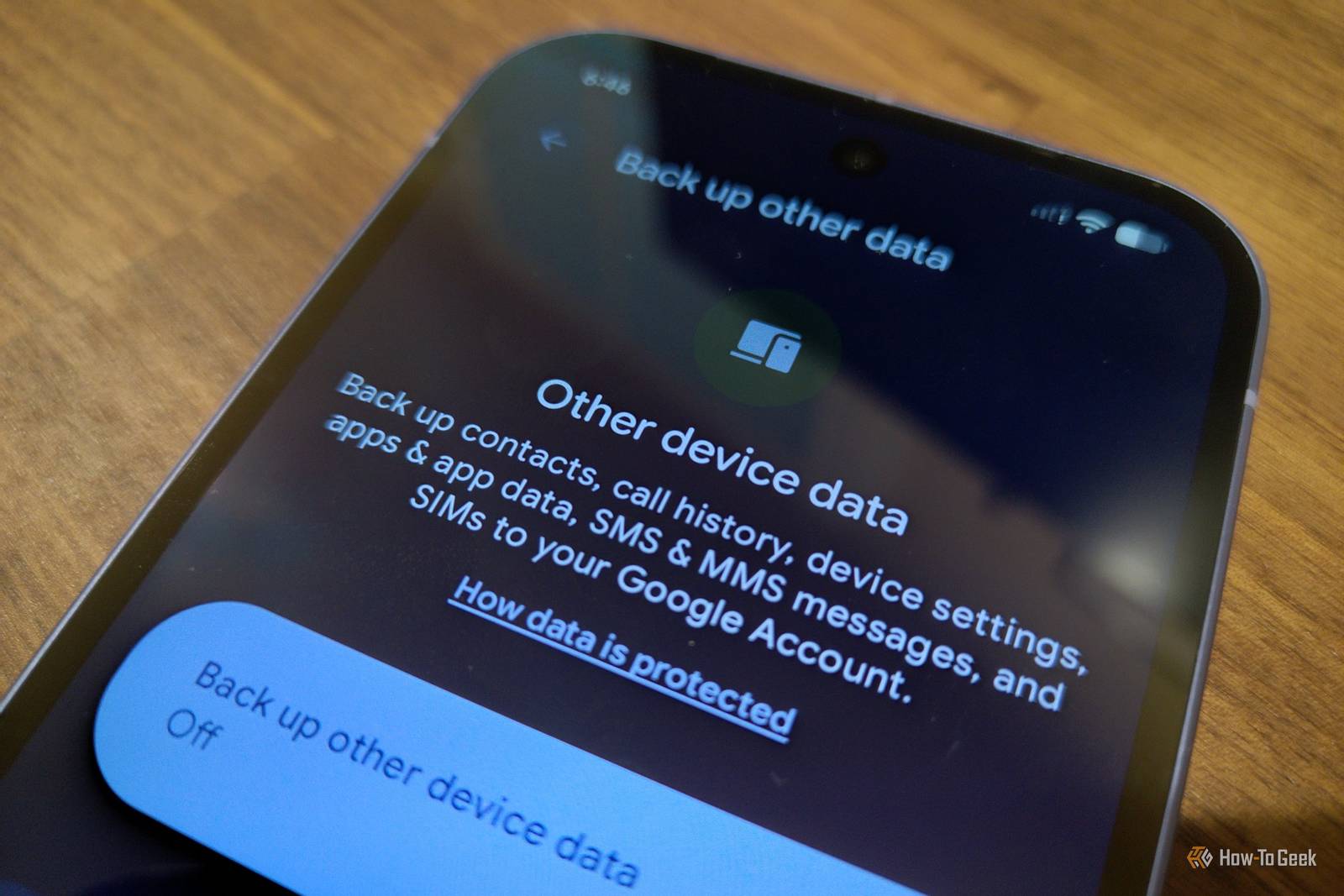

In many ways, Google Messages is a big step forward for texting on Android, but in other ways, it’s a trap. Just like how using Google Messages makes it exceedingly difficult to transfer your number back to any other texting app, enabling backups in Google Messages comes with inadvertent downsides as well.
Your activity in Messages offers Google insight into all of your text conversations. It’s a massive reach into parts of our private lives that Google couldn’t already access via Gmail, providing the company with more access to information about us that can fuel its ad machine and potentially train its AI models. While some Google Messages conversations are encrypted, not all of them are.
Most of us have made peace with this arrangement. The thing is, Gmail is opt-in in a way that Google Messages is not. If you want to send RCS messages on Android, you have to go through Google’s app. You can’t simply switch providers the way you can with email.
The Google Pixel 10a is a barely updated version of the Google Pixel 9a, with a slightly brighter screen and an upgrade from Gorilla Glass 3 to Gorilla Glass 7i. Google has shaved the remaining few millimeters from the camera bump, making it completely flat. Unlike prior versions of the Pixel a series, this model year does not share the same Tensor processor as the mainline Pixel 10.
Once signed in to Google Messages, Google will only offer to back up your messages to Google Drive. If you would prefer to back up those messages to Proton Drive, you’ll have to export your text messages out of Google Messages first.
The more you use Google Messages, the more there is to back up. Backing up text is one thing, but photos are another. With the improved quality of modern phone cameras, the photos we send each other can use up quite a bit of data.
It’s no surprise that any backup takes more space over time, but that’s easy to overlook when something is happening quietly in the background. To find out how much space Google is taking up, you must dig into app settings. There’s a good chance you won’t even think to do so until Google notifies you that your Drive is full.
When backing up your data, it’s helpful to adhere to the 3-2-1 rule, meaning three copies of your data in at least two formats, with one being off-site.
This rule of thumb generally applies to the files on our PC, like documents, photos, and videos. In truth, it’s a good practice for any data we don’t want to see disappear.
Text messages aren’t like other types of data. Cloud-based texting is stored on remote servers, not our hardware. Service providers generally keep multiple copies of our files in order to keep our data safe and maintain maximum uptime. Google Messages is something different.
SMS has never been the kind of text messaging stored perpetually on servers. Carriers hold on to copies long enough to make sure they reach their destination, and after that, they only keep a record of who messages whom. Google Messages introduces end-to-end encryption, further reducing the point of keeping an online copy. In either case, the data is stored on your device, and if you want to get it back when you switch devices, you need to directly connect to your old phone or keep a backup.
When you back up your messages to Drive, Google only keeps one copy. If you lose your phone and your backup is corrupted, your text messages are gone. So much for peace of mind.
If you would rather do without Google, sadly, you’re in for a bit of frustration. Switching away from Google Messages is a pain, so much so that I recently got a new phone number just so that I could still receive group messages on devices that don’t come with Google Messages (in my case, the Murena Fairphone 6—but the same headache is experienced if you switch to a Light Phone 3 or the Sidephone). That said, you at least have the option of using Google Messages without signing in to a Google account.
Whether signed in to a Google account or not, there is a third-party app you can use to create backups of your text messages. This app is aptly called SMS Backup and Restore. It can generate backups and store them in whichever location you wish, be that a local drive or an alternative to Google Drive.
In many ways, Google Messages is a walled garden just like iMessage. Fortunately, while some freedoms have been lost in the transition to RCS, you can still back up your conversations.
We want to hear from you. Share your perspective in the comments below, and please keep the conversation respectful.
Your comment has not been saved
This is just an ad for sms backup. I have been backing up my Google phones messages since the pixel 4. I’m on the pixel 10 pro now. Dozens of conversations with lots of messages and pictures each. Several videos too. I’m using 3.5gb this far. Google Auto deletes messages when needed.
Absolutely agree. Google messages and backup work flawlessly.
Good luck if your Google account ever gets locked for any reason. Lol
This article is just an ad for SMS Backup & Retore. That being said, I have been using it for years to back up my messages. I keep a copy on my NAS and on p.Cloud.
What’s the point of this article? You stated in the headline that I should disable cloud syncing immediately, but I found no guidance in the article on how to disable. That’s 5 wasted minutes I can never get back!
I disabled Messenger. Use Signal and WhatsApp instead.
Disabled Gmail too, as I use Yahoo.
Keep close tabs on Google photos and constantly delete long vids and pics I’ll never need again. Clean my WhatsApp folder of old useless pics and vids too.
No worries about space.
My wife on the other hand, doesn’t even look at 99 percent of the 55 thousand gmails in her inbox and other hidden folders. I have to go into her Gmail account every 6 months of so and delete everything! Which takes an hour or so….sigh 😔…
The best of How-To Geek, directly in your inbox.
By subscribing, you agree to receive newsletter and marketing emails, and accept our Terms of Use and Privacy Policy. You can unsubscribe anytime.