

A Trusted Friend in a Complicated World
By Charlotte Hilton Andersen
Updated on Aug. 27, 2025
Stop turning your phone into a friendship hazard by learning (and actually following) these texting etiquette rules
Yesterday, I sent nearly 100 texts. That’s not bragging—that’s just an average Tuesday. Which is absurd when you think about it. What else do I do 100 times a day besides pick up the glasses my kids leave all over the house? (Seriously, why do you need a fresh glass every time you’re thirsty? Is the dishwasher in witness protection?) I’d like to think I have good texting etiquette, but do I really?
Apparently, I’m in good company. Americans send about 6 billion texts every day—roughly 50 per person, according to a 2024 SimpleTexting survey. More than 90% of us text daily, and most of us check those texts within five minutes of getting them. And a whopping 80% say texting is the single most important thing they do on their phones. You’d think all that practice would make us experts at texting etiquette. Spoiler: It hasn’t. If anything, we’ve invented new ways to annoy each other digitally.
And this is exactly why texting etiquette is so important. “The phone in your hand may be small, but the manners you use with it have a big impact,” says Lisa Mirza Grotts, aka the Golden Rules Gal, an etiquette expert with more than 30 years of experience.
To figure out where we’re going wrong and what to do instead, I teamed up with Grotts; Mary Robins, a lecturer in Communications and Language Studies at Bryant University; and digital etiquette expert Richie Frieman, the author of the Quick and Dirty Tips etiquette series. Read on for their pro tips to help us stop making each other crazy, one message bubble at a time. And buckle up, because if you’re anything like me, then your text history might be about to get very embarrassing.
Get Reader’s Digest’s Read Up newsletter for more etiquette, humor, cleaning, travel, tech and fun facts all week long.

And yes, the “wyd rn” midnight booty-call text technically fits the hour—but it’s still tacky. Show your romantic partners some respect. If your affection can’t survive eight hours until morning, maybe it’s not love.
What to do instead: Instead of late-night pinging, type the message and use your phone’s “schedule send” feature. That way, you still get the cathartic release of typing it at midnight, but your friend’s phone doesn’t light up like a haunted doll at the foot of their bed.
No matter how carefully you choose your words, a condolence or breakup text lands somewhere between “cold” and “emotionally tone-deaf.” Grotts says that bad news—breakups, job losses, medical diagnoses—”needs a voice, a face or at least a phone call.” The stakes are too high for autocorrect to change “I’m here for you” to “I’m her for you.”
If the thought of saying it out loud makes you want to faint, remember: Tone doesn’t translate well over text. People need your voice, your pauses and maybe your awkward rambling. Texts are for pizza orders and “on my way,” not for ending a relationship.
What to do instead: Call, FaceTime or meet in person. If you wouldn’t put it on a Post-it, don’t put it in a text.
This bit of texting etiquette starts with knowing your audience. In casual texting, an “LOL” text abbreviation or cry-laugh emoji is harmless. In business? It’s the equivalent of showing up to a job interview wearing pajama pants. Grotts says to save the emoji party for friends and family. (Looking at you, person who sends the eggplant emoji in a work Slack channel.)
“When in doubt, write in complete sentences, especially for professional texts,” she says. And remember, not everyone speaks fluent acronym. “SMH” might mean “shaking my head” to you, but your grandma or boss could interpret it as “send more hummus,” which—while delicious—is not the same thing. Context matters.
What to do instead: Use full words, and skip emojis in professional texts. Reserve your emoji fireworks for people who know you well (and appreciate your well-honed emoji skills).
Few things feel ruder than getting “left on read”—waiting days for a reply and wondering if the other person is ignoring you or just fell into a canyon. It’s rude, Grotts says, because leaving a text unanswered for days is the modern equivalent of walking away mid-sentence. It’s not about answering immediately; it’s about letting people know they’re not shouting into the void. A quick “will respond tonight” buys you time and keeps the relationship from feeling like a one-sided pen-pal situation. Courtesy counts, even in pixels.
“This is extra important if someone is asking you a question or checks in with you,” Robins says. This shows care and respect.
What to do instead: Grotts recommends “acknowledging texts within 24 hours, even if it’s just ‘Got it, will reply later.’” At the very least, add an emoji reaction to their text to show you’ve seen it. “Responses can be in text or with emojis like hearts, questions, exclamation points, etc.,” Robins says.
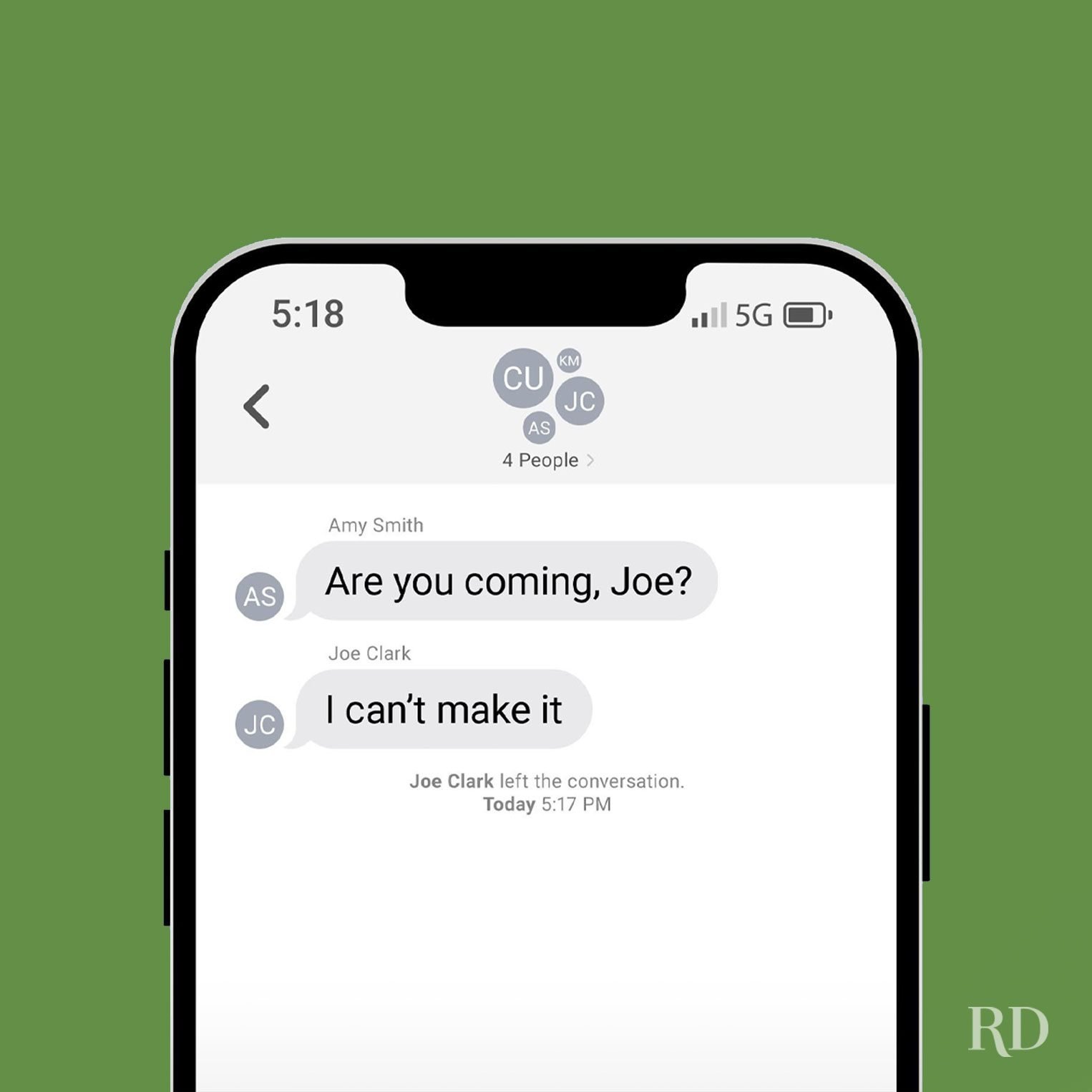
Group texts can be a blessing … or a hostage situation. We’ve all been there, trapped in a group chat about an event you can’t attend, while strangers debate whether to bring coleslaw. “Group texts should be used sparingly, and only when everyone actually needs to be included,” Grotts says. Even if you think you’re being polite by adding someone “just in case,” know that it’s code for “this will annoy them.”
And if the conversation turns into a side chat between two people? Congratulations—you’ve just given 10 others a free ticket to mute you forever.
What to do instead: Keep group chats small and relevant, and end them when the purpose is over, Robins says. And before you hit “add,” ask yourself: Will this person benefit from this conversation? If the answer is no, leave them out. If the answer is “they might,” the real answer is still no.
Robins says work texts thrive when people “stick to the point, keep it short and respect timing.” No one wants to wake up to 10 texts at 3 a.m. about the font size on slide six. This goes double if it’s a group chat.
She says the other common pitfall in work communication via text is too much social banter. A little can make the workplace feel friendly, but any more than that will turn it into a side conversation. If that happens, you should move it to a private thread. And, of course, any jokes or side comments should be kept strictly PG, unless you really enjoy chatting with HR.
“Really, work messages should just be about updates, reminders or quick questions,” Robins says.
What to do instead: To maintain proper texting etiquette, keep work messages brief, relevant, timed for normal waking hours and clean. “Skip long back-and-forth messages unless it’s really necessary,” Robins says.
Family chats are perfect for sharing photos, recipes and stories about how Aunt Linda accidentally joined a dating app. They’re not for dragging Uncle Bill about politics or having passive-aggressive fights. (Save that for Facebook—kidding!) “The goal of texting with family is to be supportive and responsive,” Robins says. “Heavy family topics are better left for private conversations, preferably in person or on a call.”
Also, pace yourself. Sending 12 back-to-back messages about your dog’s “hawt dog” Halloween costume might make people love the dog less, not more.
What to do instead: Robins suggests keeping it upbeat and avoiding heavy topics that would be better handled privately or in person. If you have a lot to share, consolidate your news into one or two texts instead of a marathon of half-thoughts.
Too many of us text like we talk—rambling, confusing and with the occasional Love Island tangent. But texting was invented to convey information quickly. It’s a lot of tiny words on a tiny screen, which makes it the wrong place for your 12-paragraph origin story. Frieman likens good texting to Bon Jovi’s advice about songwriting: “Don’t bore us; get to the chorus.” If your text is a novel-length preamble to “I’ll be late,” you’ve lost them.
Robins says it’s best to start “short and sweet,” and then they can always ask for more clarification. You can elaborate later, but you can’t give people back the minutes they lost trying to decode your plot twist about traffic.
What to do instead: “Keep your messages short, and stick to the point,” Robins says. “Get straight to the info or questions without rambling.”
Sarcasm, dark humor, double entendres—basically, all the fun stuff—tends to die in a text bubble. Without your voice, facial expression or jazz hands, it’s way too easy for “just kidding” to read as “just mean.”
“Texting has a ‘tone,’ but it’s different from speaking tone and is more likely to be misinterpreted, especially if the other person isn’t as familiar with your style,” Frieman says. “Sarcasm risks coming off as rudeness.”
What to do instead: Match your tone to the relationship and context. If you’re unsure, play it safe. And if you’re on the receiving end of a “Wait … was that a joke?” moment, just ask. It’s less awkward than spending the next three days silently resenting them.
Few things cause more notification fatigue than receiving five one-liners that could have been one message. Frieman calls it “harassment by notification.” Before you hit send, reread and make sure your thought is complete.
That said, if you’re sending two completely unrelated gems—like, “What do you want for dinner?” and “I just found a possum in the laundry room”—give them their own texts. (Otherwise, they’ll think the possum is dinner, and if they answer in an excited way, you’ll have to rethink your whole relationship.) Separate-but-complete texts keep your thoughts organized and make it easier for them to respond without interrupting you mid-type. Bonus: You’ll look like someone who has their digital life together.
What to do instead: Bundle related ideas into one tidy text; give unrelated ones their own spotlight, Frieman says.
There’s nothing like pouring your heart out to someone only to watch them pull out their phone, look down and start texting. Are they checking on their sick grandma or sending a meme to their fantasy football group? Or … are they texting what you just said to someone else? You have no idea—and that’s the problem, and why this is the ultimate violation of not just texting etiquette but basic etiquette.
Grotts’s whole philosophy is about respecting people’s time and presence. “In person, that means keeping your focus on them, not your screen,” she says, adding that if you must send a message while someone’s talking to you, explain why. For example: “Sorry, my babysitter just texted,” or “My boss needs a quick answer.”
Frieman adds that this isn’t just about manners; it’s about managing tone. When people know what you’re doing, they’re less likely to assume you’re ignoring them.
What to do instead: If you’re with someone, keep your phone away. If you need to send a message, give a quick explanation so they know you’re not just bored with their story about Costco rotisserie chicken.
The golden rule of etiquette is also the golden rule of texting—and one that has caused serious interpersonal conflict, work confusion and at least one international incident. Why? Frieman warns that some people grow “text muscles,” saying things from behind a screen they’d never have the courage to say face-to-face. “Screens can make people bolder, but screenshots are forever,” he says. Once you hit send, you’ve basically carved your message into stone.
What to do instead: If you wouldn’t say it to their face, don’t text it. And if you do, be ready to have it read back to you—with dramatic flair—at brunch.
“Look, I love a good meme or GIF. They can make someone laugh out loud and lighten the mood,” Frieman says. “But if your only contribution to the chat is a stream of animated eye-rolls and dancing cats, it gets old fast. Humor is good. A digital one-man variety show? Less so.”
In short, less says less is more, he explains. Pick the perfect GIF, and let it stand. Dropping 14 in a row is like telling the same joke over and over, but louder.
What to do instead: Use GIFs sparingly for maximum impact.
“Knowing when to stop texting is a life skill,” Frieman says. “Do not keep texting just because you’re bored or you’re holding someone’s attention. Don’t assume they’re available for a marathon chat just because you are.” Respect their time, even if they’re literally sitting five feet away. Ending on a high note beats limping out with an “anyway …” and those three sad dots.
Grotts points out another big pitfall here: using texts to keep an argument going after the other person has clearly tapped out. That’s not “standing your ground”—that’s “fast-tracking yourself to the mute or block list.”
What to do instead: Let conversations end naturally. And if someone says they don’t want to talk about it anymore, take the hint—don’t turn your phone into a weapon.
This should go without saying, but apparently it still needs to be said: Texting while driving is not “multitasking.” It’s “auditioning for a cautionary tale.” Even if you think you’re good at glancing down “just for a second,” that’s all it takes to miss the car jamming on its brakes in front of you, the red light or the fact that you’ve just merged into a funeral procession.
Frieman points out that respect for people’s time isn’t just about when you text—it’s also about how and where. If you’re texting someone you know is driving, you’re putting them in a position where they either have to ignore you (and risk you getting mad) or reply (and risk you getting a call from the hospital).
What to do instead: If you’re behind the wheel, put the phone down, Grotts says. If you know they’re driving, wait. That “urgent” message about which chips to buy for the party can survive 10 minutes in your drafts folder.
Reader’s Digest has published hundreds of etiquette stories that help readers navigate communication in a changing world. We regularly cover topics such as the best messages to send for any occasion, polite habits that aren’t as polite as they seem, email and texting etiquette, business etiquette, tipping etiquette, travel etiquette and more. We’re committed to producing high-quality content by writers with expertise and experience in their field in consultation with relevant, qualified experts. We rely on reputable primary sources, including government and professional organizations and academic institutions as well as our writers’ personal experiences where appropriate. For this piece on texting etiquette, Charlotte Hilton Andersen tapped her experience as a longtime journalist who specializes in etiquette and communication for Reader’s Digest. We verify all facts and data, back them with credible sourcing and revisit them over time to ensure they remain accurate and up to date. Read more about our team, our contributors and our editorial policies.
Our Brands
We are no longer supporting IE (Internet Explorer) as we strive to provide site experiences for browsers that support new web standards and security practices.
We recommend our users to update the browser.