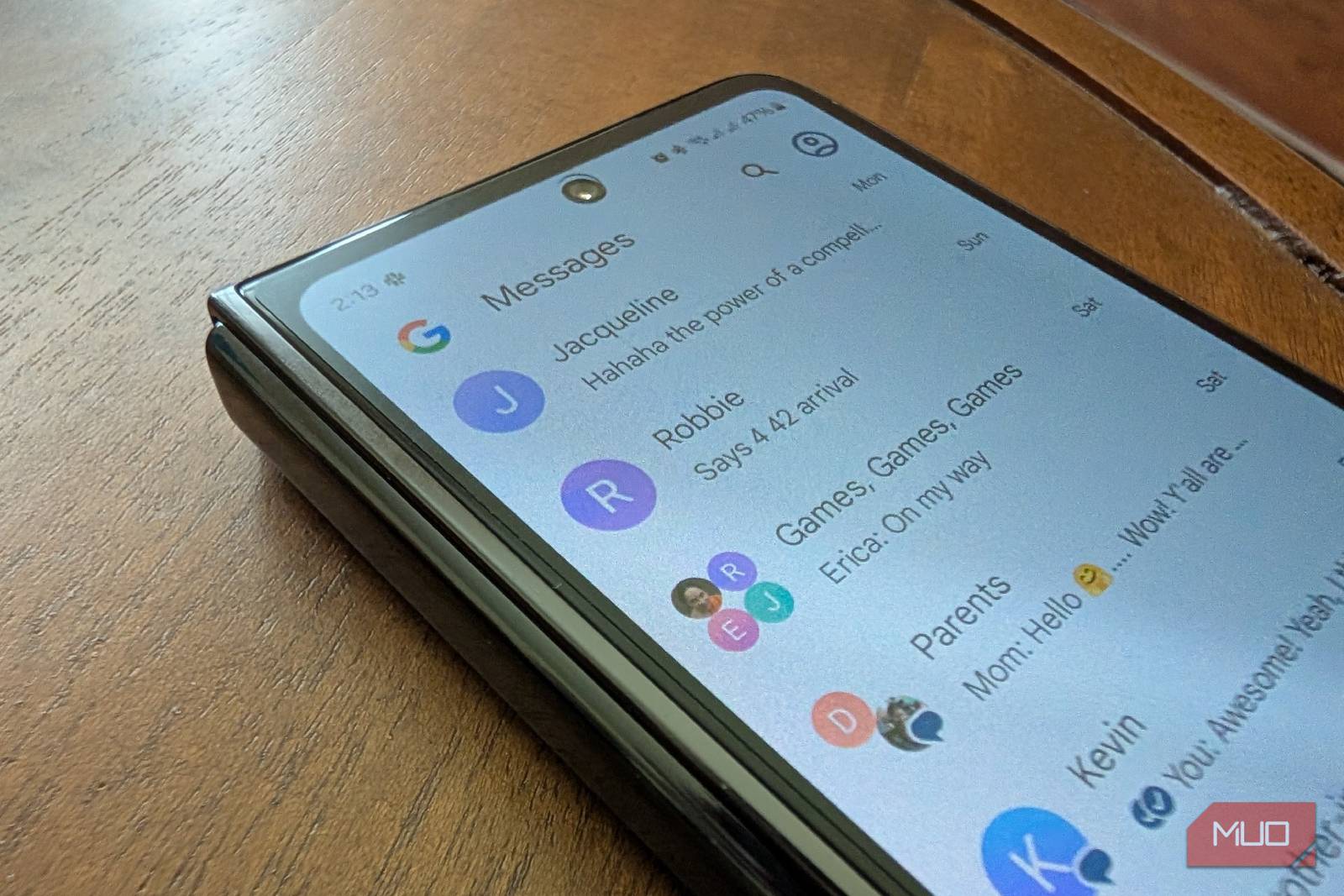
Group chats should be simple: add everyone to a thread, and they can talk to each other. But this is rarely the case in reality—especially when your group contains a mix of iPhone and Android users.
I recently had a bad group chat experience that didn’t have an obvious cause at first. You should know about this, because your group chats might also be suffering for no good reason.
I have a group chat with ~10 friends I play video games with on a regular basis. We’re a mixed-device group; as messaging apps like WhatsApp aren’t as common in the US, we unsurprisingly use a standard group chat in the default messages app. Despite the lack of modern features, this is usually fine.
However, we recently had an issue where message delivery was all over the place. Some people wouldn’t get messages at all, or they’d see messages from certain folks but not others. Messages would arrive out of order, or many hours after they were sent. Sometimes, a member’s phone would show texts as sent to them individually, instead of in the group.
Since we use the group to ask who wants to play in a short while, it’s a pain when you don’t know if anyone is even seeing your message. While I couldn’t troubleshoot this directly, a small bit of text on the conversation screen alerted me to what was going on. And this requires discussion of messaging protocols to understand.
When everyone in a group chat is using an iPhone, it works smoothly. This is because the chat uses iMessage, Apple’s internet-based messaging service. Indicated by blue bubbles, this includes modern messaging features like read receipts, typing indicators, sending with effects, and more. There are also iMessage tricks exclusive to the service.
However, when at least one person in a group chat uses Android, this gets murkier. That’s because for non-Apple group chats, there are now two messaging protocols: RCS and MMS.
MMS (Multimedia Messaging Service) is an extension of SMS (Short Message Service). SMS is the basic protocol for 160-character texts that’s been around since 1993, and is still in use today. But because it’s limited to one-on-one messaging, the expanded functionality of MMS is used for group chats.
MMS is more robust than SMS—it allows you to send media and longer texts—but it’s still outdated for today’s usage. It doesn’t support modern functionality, and has frustrating limitations like not letting you add or remove people from a chat (you have to start a new one).
RCS (Rich Communication Services) is a newer standard, designed to upgrade SMS and MMS, that’s been slowly rolling out since the late 2010s. It was created to be an open protocol, rather than a proprietary messenger like iMessage or WhatsApp.
It adds modern messaging features like delivery receipts and greatly increases the cap on media sizes, meaning videos sent over RCS don’t look like garbage as they do on MMS. While RCS was Android-only for a while, a notable Google campaign pressured Apple to add support to iPhone. RCS was finally added to iPhone with iOS 18’s release in September 2024.
All this history is why group chats are more complicated than they appear. Adding to the confusion, your messaging app and carrier must both support RCS for your phone to use it.
Thankfully, most US carriers (including AT&T, Verizon, T-Mobile, Mint Mobile, Visible, Boost Mobile, UScellular, and Google Fi) support it (Wikipedia’s RCS page has more details). It took a while for certain carriers—I have Mint Mobile and wasn’t able to use RCS until iOS 18.4 released in March 2025.
It needs to cook.
On iPhone, Apple’s Messages is the only messaging app, so support isn’t an issue there. For Android, Google Messages is the only true option for RCS messaging. Samsung Messages also supports RCS, but it’s being phased out in favor of Google’s tool.
As you might expect, my problematic group chat was using MMS, not RCS. Hoping to fix the issue, I set out to check who wasn’t using RCS. Since I have an iPhone, this involved extra steps.
For the Android users in the group, it was easy to check if they have RCS enabled. When you enter someone’s name in the To field, you’ll see Text Message • RCS if they’re using the newer protocol, or Text Message • SMS if not. However, iPhone users will show iMessage, leaving you in the dark about their RCS status.
There were two ways to check this; I chose to message my Android-using friend separately. By using the same method, he could see that three members of the group (two on Android and one on iPhone) didn’t have RCS enabled. Another way would have been to temporarily turn off iMessage and check again on my phone.
From there, it was a matter of reaching out to those people individually and asking them to enable RCS. Even this isn’t simple, though. Because of all the layers, each person has to make sure that their carrier supports RCS, they’re using an app that allows it, they’ve updated their OS, and have the option enabled.
It shouldn’t take this many steps to get a messaging tool working properly. While RCS sounds easy, the multiple barriers to someone using it—without even realizing—can downgrade group chats for everyone. If a single person isn’t using RCS, the entire chat downgrades to MMS.
And for all this trouble, RCS isn’t perfect. Its most notable flaw is inconsistent end-to-end encryption (E2EE), which protects your messages from being read by anyone except for the intended recipient. E2EE is currently not supported for RCS chats that involve an iPhone, and encryption can also depend on your carrier.
For this reason and others, it’s a good idea to move your group chats to a superior messaging app, if possible. I recommend Signal, which has rock-solid encryption trusted by security experts and isn’t tied to Meta. Otherwise, WhatsApp is E2EE, and a wildly popular option outside the US. Telegram has great features, but chats aren’t E2EE by default.
Aside from encryption, modern messaging apps include other handy features like “view once” media, quick location sharing, polls, and easy video calls. RCS and SMS/MMS are great for convenience or fallbacks since they work with the default apps everyone has, but they aren’t worthwhile homes for frequent group chats.
Even if you don’t have the same message delivery problem we did, MMS group chats are terrible. Take a moment to check yours today and make sure your group chats aren’t suffering from a preventable cause. Whether you get everyone to enable RCS or switch to a dedicated app, you’ll appreciate the upgrade.
I understand it’s difficult to get many people to switch what they’re used to, but it’s worth it. We still haven’t gotten everyone in the group onto RCS, but thankfully, messages have been coming through normally.
We want to hear from you! Share your opinions in the thread below and remember to keep it respectful.
Your comment has not been saved
This thread is open for discussion.
Be the first to post your thoughts.

Your group chats might be terrible without you even realizing it – MakeUseOf