The carnage on Ghana’s roads is not a joke. Road crashes killed 2,949 people in 2025, up from 2,494 the year before.
Serious injuries rose to 16,714. Many people believe that bad motorist behaviour has a big part to play, and that the Police are either too stretched thin or too corrupt to effectively enforce deterrence.
So when the government announce that it is deploying technology to improve the situation, it is hard to argue with the logic. However, there were some murmurings about poor sensitisation.
The Police took the cue and postponed implementation by a month. We now have to wait until 1st November 2026 before the police start fining motorists by text message.
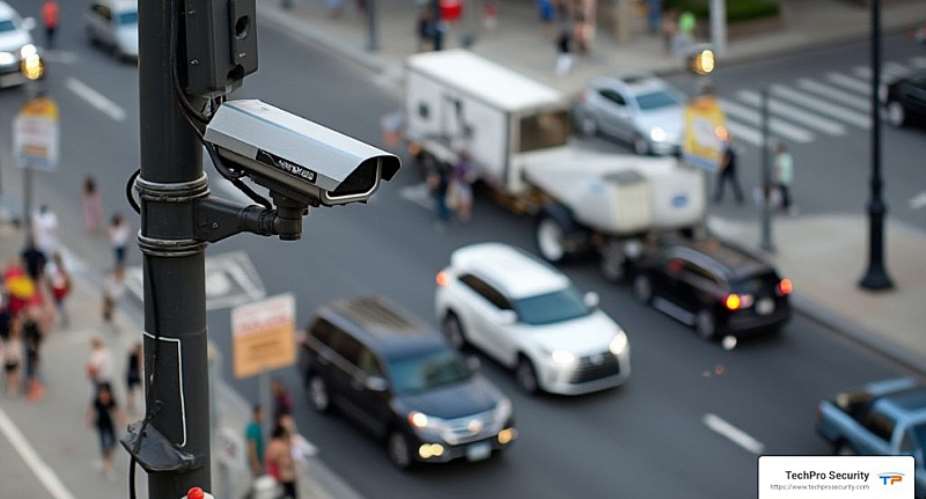
Cameras and handheld devices will catch vehicles speeding, jumping red lights and committing more than 45 other offences, and the registered owner will get an SMS with the fine and 14 days to pay.
How are we going to use the one month to influence how the program shapes up? On my part, I see a teaching moment for katanomics (www dot katanomics dot org).
The katanomic framing of the SMS-spot-finding initiative is that, as usual, the political vision is easy to sell (stop road carnage). It is a simple WHAT message that rallies the people.  The HOW – the realm of POLICY – is where things usually start falling apart. Because POLICY takes a simple goal and unravels it into many complex parts, some of which are in tension. THE DEVIL IS ALWAYS IN THE DETAIL. Since you’ve read up to this point, you asked for it.
1. The journey to the Traffitech-GH system surprisingly started around 2008, nearly 20 years ago. Implementation of the idea of using cameras to catch traffic violators and issue spot fines has had a bumpy ride.
2. The person who has kept it going is a gritty entrepreneur who has survived the NPP – NDC rollercoaster that has quenched so many business dreams. His name is Frank Osei. The heart of his empire is Nationwide Technologies.
3. He sold the tax stamps and fuel marking to the NDC in the Mills era. The NDC were slow to get either to a serious scale. The NPP came and bulldozed them through. He pushed the public-private partnership (PPP) concession for the text-messaging spot-fine system during the NPP era and helped get the agreement signed in 2022. The NPP was sluggish in deploying. The NDC seems determined to bulldoze it through.
4. As I said, Mr Osei set up Nationwide Traffic Management & Enforcement Limited (NTMEL) in 2008 and started pushing aggressively. As was the case with the tax stamps and fuel marking projects he helped broker with the government, he ended up needing a foreign technology partner from Sweden, a company called Sensys Gatso.
5. The origin of Sensys Gatso is actually in 1950s Holland, where a relentless speed-racing driver, Maurice Gatsonides, decided to invent an automated speed-tracking technology to sustain his impossibly high standards.
6. Sensys Gatso’s TRaaS and related technologies will, initially, be deployed in Ghana primarily in the form of fixed cameras at about 34 hazardous junctions, ~20 in-vehicle cameras, ~30 handheld laser cameras and tripod units to record offences.
7. Officers also log offences on handheld devices. Images will go to regional back offices, where police review them before a notice is sent by SMS from “GPS-MTTD”. Owners can pay through Ghana.gov, mobile money or *222#, or contest online and attend a hearing at an MTTD station. MTTD is Ghana’s transport police.
8. Camera fines start at GH¢120 for the first three offences, then GH¢180 and GH¢240. A sixth offence within 24 months can go to court and cost a licence for at least a year. After 14 days, 1 per cent of the fine is added every day, so an unpaid GH¢120 fine becomes GH¢240 after 100 days of default. No cap has been published.  9. Unpaid fines can block DVLA services, and officials have floated restrictions linked to the Ghana Card. The registered owner is liable “regardless of who was driving”.
10. The first time Ghana really got serious about doing this was in 2016 when an agreement was reached to deploy in 2017. In April 2018, the President’s road-safety action plan directed a partnership with “private towing companies and NTMEL.” GH¢335 million a year was promised for three years, partly to pay for road signs and markings, and the techie stuff. The towing scheme collapsed that year. The rest crumbled on cue, though some people got “warning text messages.”
11. By the end of 2021, the Ministry of Finance listed the project as an unsolicited proposal under negotiation at an estimated US$9.9 million.
12. As mentioned earlier, the current PPP agreement was signed on 23 December 2022 for eleven years (to December 2033) with a reported investment cost of GH¢77.73 million (about $7.3 million then). Caution notices began in June 2024, and about 120,000 had been sent by the end of 2025.
13. The law itself came last. The Road Traffic (Amendment) Act, passed in December 2025, mentions automated enforcement once, by adding that a “spot fine” includes an automated fine. Owner liability, the daily surcharge, licence penalties and camera evidence are all perching in regulations passed in 2026 (L.I. 2519).
14. Note the classic katanomics: the contract, whose economics depend on fines, was signed three years before the state had the regulations to levy them.
15. I find it puzzling that Police and ministers seem so guarded about explaining this history. They regularly refer to “a private sector partner” and provide no further details.
16. Yet Sensys Gatso has been very open about the whole commercial apparatus.
17. NTMEL’s shares are split exactly 60 per cent to Mr. Frank Osei and 40 per cent to Sensys Gatso International B.V., part of the Swedish-listed Sensys Gatso Group, as aforementioned.
18. The Ghanaian majority is, however, only part of the picture. The Board is split right down the middle. Lewis H. Miller, who became chief executive of Sensys Gatso Group in June 2025, and Timo Gatsonides, one of Sensys Gatso’s largest shareholders hold the fort for the Swedes on NTMEL’s 4-person Director list.  19. NTMEL’s managing director, Edmar van der Weijden, is also managing director of Sensys Gatso International, the 40 per cent shareholder. A former Sensys Gatso chief executive is registered as a beneficial owner of NTMEL with the right to appoint and remove directors.
20. Sensys Gatso also supplies the cameras and software, and has said it expects to earn from hardware sales and licence fees on top of its share of profits.
21. Like the Margins-run “Ghana Card”, the whole Traffitech-GH scheme is fundamentally commercial. The revenue comes from fining people and is split 40 per cent to the private party and 60 per cent to government. That is to say, if you are dumb enough to text whilst driving, you will be putting a cool ~50 GHS into the pocket of Mr. Osei and his Swedish partners for each text.
22. Sensys Gatso has told its investors to expect about SEK 600 million (~$60 million) in joint-venture revenue over the rest of the contract. Its 2025 annual report shows NTMEL had no revenue in 2024 or 2025, lost SEK 5.9 million (~$600k) in 2025, and ended the year with SEK 2.9 million in cash. The operator needs fines to flow.
23. The government’s 2022 PPP report lists “revenues from traffic fines for Government” among the benefits it expects to maximise. Finance Ministry mandarins are sitting there with a calculator waiting for clowns to jump red lights.
24. I will admit it, I am a bit uneasy about this. Not because I have sympathy for red-light jumpers. I just think that when the operator’s income rises with every fine-ticket, the pressure is to put cameras where tickets are plentiful rather than where people die, to tighten thresholds of offending, and to resist appeals.
25. Uganda’s version of this model reportedly gave its foreign operator 80 per cent of fines and was suspended within days of launch in June 2025 because of such perverse incentives.
26. I also think that the investors have been waiting to rake in revenue before bothering to invest. The whole operation feels too barebones given the scale of the problem. It is true that Ghana already has thousands of outdoor cameras. But these are Chinese-vendor-supplied national security cameras that are unsuitable for Traffitech-GH for many reasons, including privacy and the lack of special traffic-monitoring-focused features. This means NTMEL must deploy a ton of cameras and personnel to review the footage/images. So far, they appear to be waiting for the fine revenue to go through the roof before doing this.  27. I also worry about enforcement quality. Sending a text message to people in a country like Ghana to pay a fine is literally daring them to ignore, wait, and see. Would we then rely on the same Police we are replacing with tech due to their supposed ineptitude, incapacity and/or corruption to go around forcing people to pay?
28. The idea of hooking this up to drivers’ licenses and Ghana Card sounds brilliant in theory, but it runs heavily into the serious informality that attends every aspect of our lives in Ghana. Unlike elsewhere, people don’t have to encounter the formal system regularly to survive. The same reason why, despite repeated “mass registrations”, we keep hearing that the Ghana Card system is porous is the reason why relying on civil identity platforms would, in my humble view, prove less robust than we think. ,
29. The 2024 pilots showed that missing owner information in DVLA records, and insurance records still bearing brokers’ phone numbers instead of owners’, are rather pervasive issues. Vehicles registered by hand before 2023 are still being re-verified. So, anyone who sold a car without completing the transfer, or changed their number, may learn of a fine only once penalties have piled up.
30. Seven people were arrested in February 2026 for sending FAKE fine notices with payment links. The scammers are already ahead of the system.
31. Another issue is that disputes go to MTTD stations. There is no independent body, unlike South Africa, where a separate agency adjudicates. So, we are back to making this a Police gig.
32. I worry that the basics may not even be in place. Speed enforcement is fair only where limits are posted. Red-light enforcement is smooth only where signals work. Where the infrastructure itself seems designed to promote disorderly behaviour, we may yet find that the system regularly gets overwhelmed by the sheer volumes of recorded violations.  33. It seems very clear to me that the government, and the Police in particular, have a fine one-month opportunity to show that they can rise above katanomics. There are several things they can do in that regard.
34. They can publish the PPP contract for further scrutiny; change the terms from a share of fines to a fixed fee to discourage overzealous and commercially minded deployment; tighten the law to avoid abuse of the system to track and spy on people (ensuring that images aren’t passed around to jealous husbands or something, for instance); implement an independent appeals process; publish a risk-based deployment map (i.e. investment in cameras etc., should follow what the data says about the highest risk of road crashes); and outline a safeguarding measure against scams and fraud.
35. Will the Police beat katanomics? Who is up for a bet?
CitiNewsroom.com is Ghana’s leading news website that delivers high quality innovative, alternative news that challenges the status quo.

© 2024 All Rights Reserved Citi Newsroom.
© 2024 All Rights Reserved Citi Newsroom.

The Traffitech-GH SMS spot-fine system: The good, the sad, and the funny – Bright Simons writes – CitiNewsroom.com