

Rob LeFebvre is an editor and writer focusing on consumer and enterprise technologies for a broad range of outlets. He’s been writing online for more than 15 years; before that he was a special educator for kids with severe disabilities.
Rob has been an Editorial Director at Lifewire, a news writer at Engadget, and a senior contributor at Cult of Mac. He’s written about PCs, Macs, mobile phones, and games, created newsrooms from the ground up, and has extensive experience reviewing hardware, software, and games across his career.
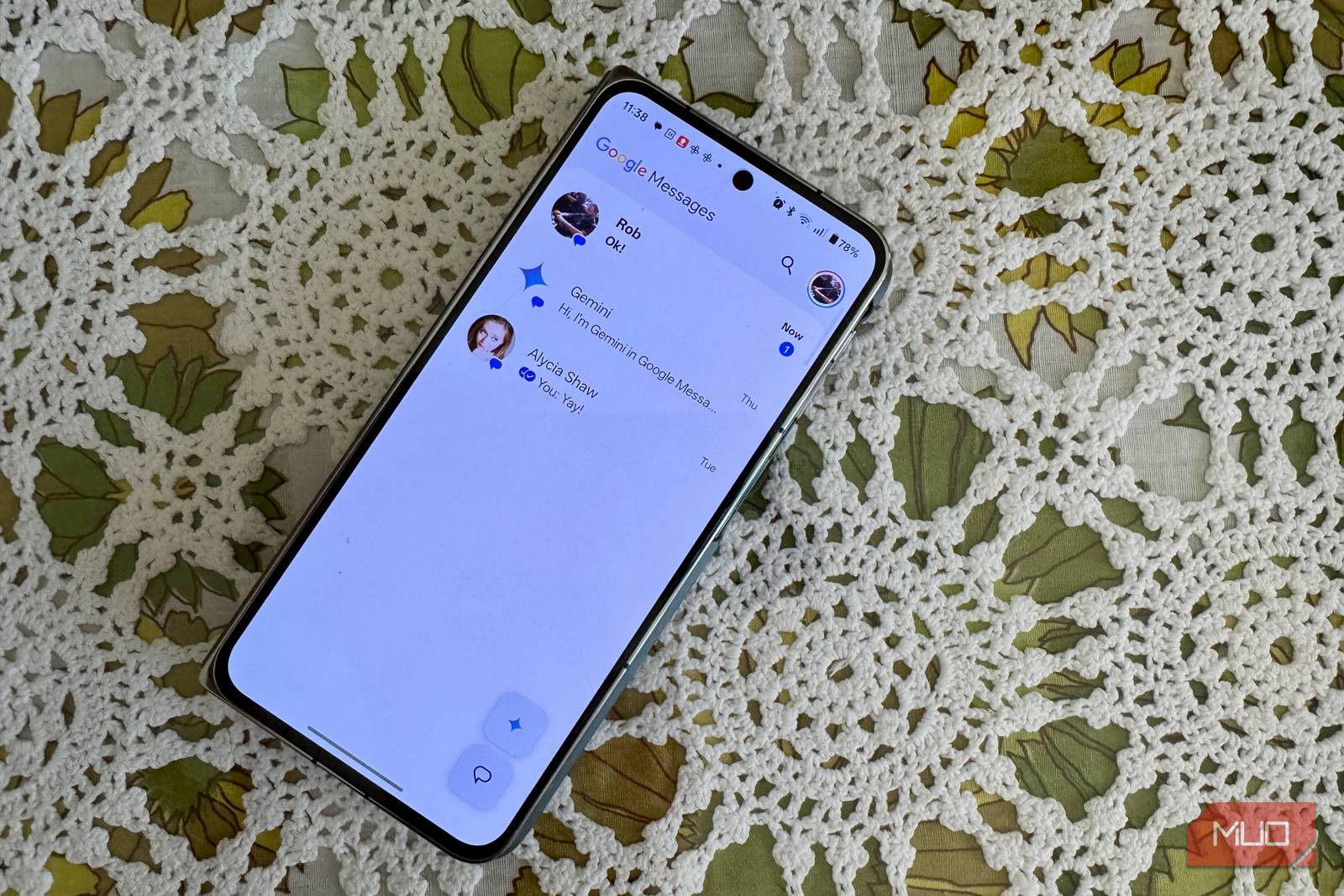
I sent texts from my OnePlus Open to my girlfriend the other day and noticed a small blue chat bubble icon next to her name in the list of chats. There are also a bunch of RCS chat labels inside the thread, and in the message field. I decided to find out what that means, and it turns out the blue bubble means that my texts have upgraded features, though I’m not sure that it’s actually encrypted, yet.
It needs to cook.
That small blue chat bubble icon or dot next to a contact in your Google Messages app means that the conversation is using Rich Communication Services, or RCS, instead of the older SMS or MMS. If you’re on Samsung Messages, you’ll likely see a blue dot instead of a bubble, but it all means the same thing. RCS is the modern replacement for traditional texting. It works over Wi-Fi or mobile data, and it supports high-resolution media, read receipts, typing indicators, high-resolution photo and video sharing, and longer messages without the 160-character SMS cap — a meaningful upgrade even without encryption.
Both you and your contact need to have RCS enabled for the icon to show up. If your contact is on a carrier or device that doesn’t support it, the bubble disappears and the convo takes place over SMS, which doesn’t have those features. The color could also follow your system theme, so don’t panic if it looks a little different on your own device.
When you’re in the active RCS message thread, the text field reads “RCS message” instead of “Text message,” and you’ll likely see a label like “RCS chat with [name]” at the top of the conversation. That’s your confirmation that RCS is actually running, and not just enabled in settings.
The chat bubble (or dot on Samsung) tells you RCS is active. That’s already an upgrade, as you get read receipts, typing indicators, high-resolution photos, and no 160-character limit. What it doesn’t automatically mean is that your messages are end-to-end encrypted.
Android to Android, encrypted RCS has been around since 2021. Google says that a lock icon appears on the send button and next to message timestamps when encryption is active in a message thread. I don’t see a lock, but I do see the RCS bubbles, so my messages are using the RCS protocol; they’re just not encrypted end-to-end. That means my carrier can technically read them in transit (not that they likely care what I’m saying). That’s still a big step up from SMS, where messages travel as plain text through carrier infrastructure with no protection at all — RCS at minimum uses TLS (Transport Layer Security), the same baseline encryption that protects websites, even when end-to-end encryption isn’t active.
For a long time, texting an iPhone user from Android meant becoming one of Apple’s green-bubble SMS users. Once Apple adopted RCS with iOS 18 in 2024, cross-platform chats gained read receipts and typing indicators, but not the encryption. The bubbles were still green, though. Boo.
The beta roll-out for end-to-end encrypted RCS chats for iPhone users began in iOS 26.5 and users on the latest version of Google Messages.
My testing shows that RCS is active (both on the iPhone and the Android phone), but there’s no lock icon. That means the rollout hasn’t gotten to me, yet. That’s likely where most Android users will sit until it all gets sorted.
If you want to have secure conversations, a dedicated app like Signal (or WhatsApp) is still the best option, since encrypted RCS messages require everyone in the conversation to have a compatible carrier and up-to-date Google Messages (and iOS 26.5 for iPhone users). One person not in that loop drops the whole convo back to unencrypted.
If the lock does show up, know that it only covers messages in transit. It won’t protect against someone with access to your unlocked phone, protect you from screenshots, and it won’t apply to older messages sent before encryption was active.
Open Google Messages, tap on your profile icon in the top-right corner, and select Messages Settings > RCS chats. Toggle Turn on RCS chats to ON if it isn’t already. You might be prompted to verify your phone number, but once connected, you’ll see RCS message in the text field of any conversation if the other person has RCS enabled.
If you don’t see RCS options at all, your carrier might not support it. All three major US carriers do as of 2026, though, so if you’re on a smaller or prepaid plan, check with your provider.
RCS is already doing more for your texts than SMS ever did; the encryption is just the last piece catching up.
The OnePlus Open is OnePlus's flagship book-style foldable smartphone, featuring a 6.31-inch outer display and a 7.82-inch inner foldable panel — both running at 2K resolution with 120Hz adaptive refresh rates and Dolby Vision support. It's powered by a Snapdragon 8 Gen 2 chipset paired with 16GB of RAM, and backs that up with a Hasselblad-tuned triple camera system headlined by a 48MP Sony LYT-T808 "Pixel Stacked" sensor. OxygenOS's Open Canvas multitasking makes genuine use of the large inner display with split-screen and triple-app layouts. At 239 grams, it's among the lightest foldables available. A 4805mAh battery with 67W fast charging rounds out the package.
We want to hear from you. Share your perspective in the comments below, and please keep the conversation respectful.
Your comment has not been saved
For as far back as I can remember, the blue dot on a bubbled text contact icon simply means ”new incoming text recieved”. It will appear regardless of rcs.
The best of MakeUseOf, directly in your inbox.
By subscribing, you agree to receive newsletter and marketing emails, and accept our Terms of Use and Privacy Policy. You can unsubscribe anytime.