We use some essential cookies to make this website work.
We’d like to set additional cookies to understand how you use GOV.UK, remember your settings and improve government services.
We also use cookies set by other sites to help us deliver content from their services.
You have accepted additional cookies.
You have rejected additional cookies.
Departments, agencies and public bodies
News stories, speeches, letters and notices
Detailed guidance, regulations and rules
Reports, analysis and official statistics
Consultations and strategy
Data, Freedom of Information releases and corporate reports
The Student Loans Company (SLC) is warning new and returning students to be vigilant of scams, as the new 25/26 academic year gets underway.
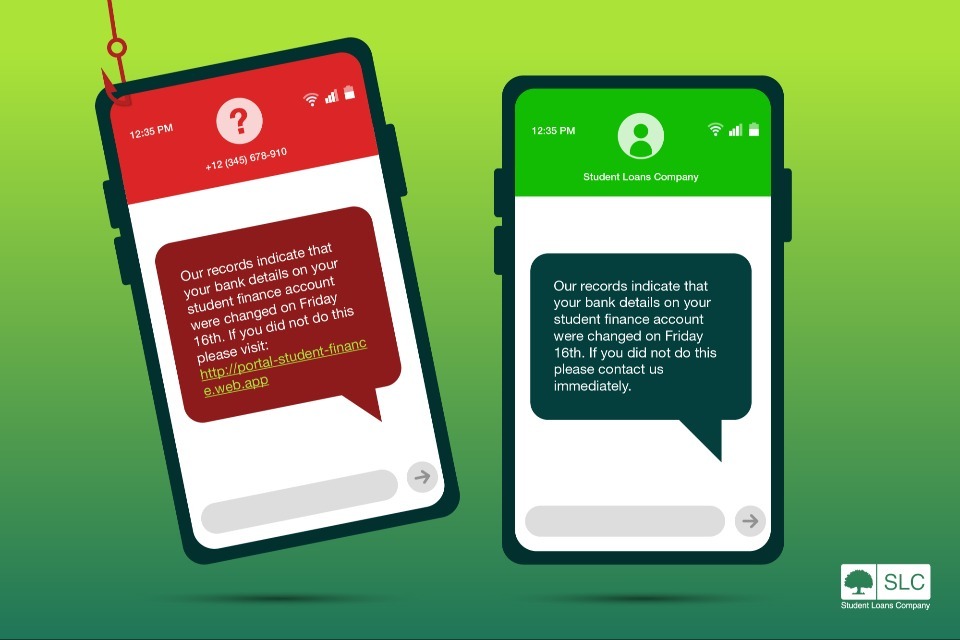
In September, SLC will pay approximately £2.2billion in maintenance payments to almost one million students as they start and return to university. However, at this time of year, students can be targeted by scammers, with text message (SMS) fraud currently the most popular form of scam.
Alan Balanowski, Risk Director at SLC, said: “SLC’s mission is to support students to invest in their future and being at university is a very exciting time – but it’s vital that they also remain vigilant and aware of scams as they start or return to university.
“The methods used by fraudsters are constantly evolving, with more sophisticated and different technologies being used to target students. This is especially true around the start of the academic year, when the first payments are being made. Scammers are well aware that students will be starting to receive their maintenance loan from us and over the last two years we have seen a rise in attempts to defraud students, including people impersonating SLC or students via phone calls (vishing), contact by text message (smishing) or via emails (phishing).
“We have a range of prevention methods that we use to identify and stop scammers and last year, we stopped £45.5m being stolen from students. We are committed to protecting students, however, it’s vital that they can spot signs of a scam and act to protect themselves and their money from falling into the wrong hands. Our message to students is simple – think before you click.”
SLC’s top tips for identifying and stopping a scam
SLC also has a range of methods to protect students, including sending a SMS to customers in England if a change has been made to their banks details and asking them to confirm the change. If a customer hasn’t changed their details but receives a message, they should log into their online account to review their information.
SLC will also never ask students to provide their personal or financial information via email or text message. If a student receives a suspicious message, they should report it to SLC’s Economic Crime Unit immediately by emailing [email protected] and calling the dedicated hotline on 0300 100 0059. Neither SLC or Student Finance England (SFE) provide any services through WhatsApp and will never initiate contact with a student through social media channels to discuss their application or student finance entitlement. If a customer receives a communication from SFE that they are unsure of, they should log into their online account to verify if it’s genuine.
There is also a range of additional advice and information on recognising and avoiding scams from Action Fraud, the UK’s national reporting centre for fraud and cybercrime, as well as Stop! Think Fraud, a campaign from the Home Office.
The following links open in a new tab
Don’t include personal or financial information like your National Insurance number or credit card details.
To help us improve GOV.UK, we’d like to know more about your visit today. Please fill in this survey (opens in a new tab).

Students reminded to be vigilant of scams as 25/26 academic year begins – GOV.UK