
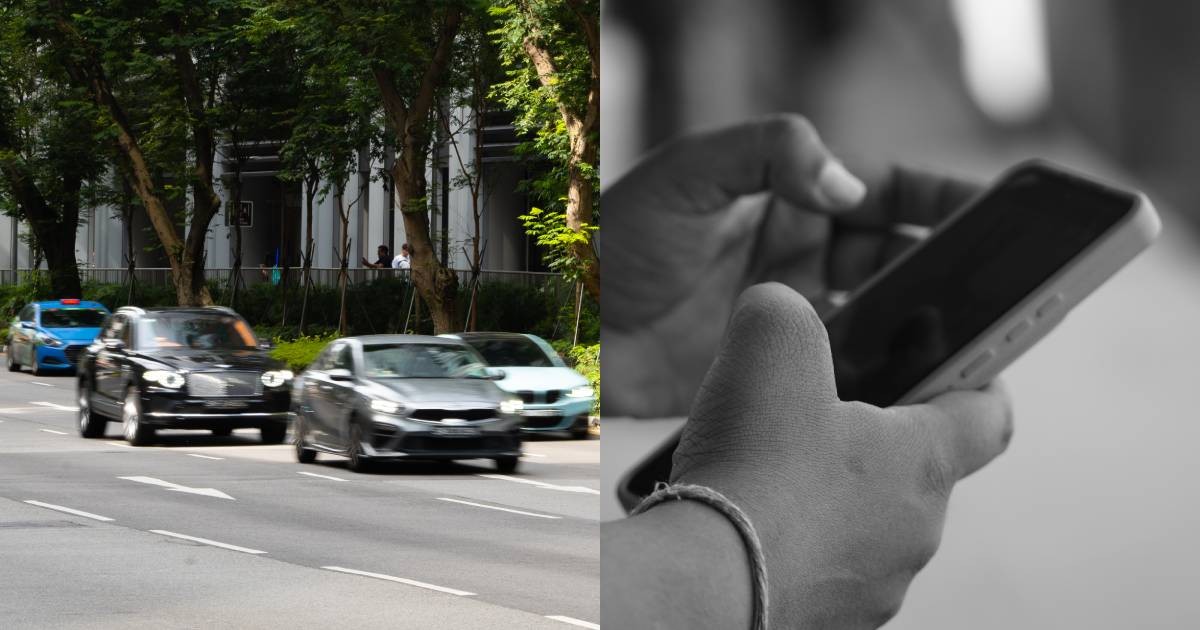

A Malaysian man drove around Singapore for up to 12 hours a day with an "SMS blaster", transmitting more than 10,500 phishing messages to various mobile phone users in October and November 2025.
The device mimicked a mobile network and pushed phishing messages to phones within its range, tricking users into providing their WhatsApp login details through a fraudulent webpage, CNA reported.
More than 31,820 mobile phones came within the coverage area of the SMS blaster, and at least one victim reported losing more than $1,800 after transferring money to a third-party bank account.
Ong Kak Seng, 28, took on the job after accumulating debts of around RM80,000 (S$24,900) with unlicensed moneylenders, according to The Straits Times.
He was sentenced to a year and nine months' jail and fined $1,500 on Monday (Sept 14).
Ong pleaded guilty to one count of cheating. He will serve an additional week in jail if he fails to pay the fine.
Court documents cited by The Straits Times showed that Ong became acquainted with a man known as "Bai Ge" in 2023.
In October 2025, Bai Ge learned of Ong's debts and offered him a job that paid RM1,000 a day.
The job involved driving around densely populated areas in Singapore or Hong Kong for between 10 and 12 hours a day with an SMS blaster in his car, reported CNA.
The court heard that Ong knew the work was illegal, as the amount offered was about 10 times what a legitimate driver in Malaysia would typically earn.
Ong chose to work in Singapore and later learned how to assemble and operate the SMS blaster at Bai Ge's home in Malaysia.
On Oct 12, 2025, Ong assembled the device and placed it in his car, The Straits Times reported.
He also bought two mobile phones to operate the setup.
One phone reportedly functioned as his "primary device" which he paired with the blaster device to turn the device on and off remotely using an application.
The other phone operated as a "secondary device", in which he would grant the "primary device" Internet access through the "mobile hot spot" function, according to The Straits Times.
He reportedly drove around numerous locations in Singapore between Oct 12 and Nov 18, 2025, with the device, antennae and various battery packs at the back of his car.
He also met up with a Singaporean, Lie Dao Jing, who was allegedly performing the same task as him. Lie's case is pending, reported The Straits Times.
Ong was reportedly arrested on Nov 18, 2025 when officers from the Singapore Police Force's Police Intelligence Department and Commercial Affairs Department conducted an islandwide operation to catch those involved in transmitting phishing messages, based on multiple reports from the public.
The prosecution argued that the potential for harm in Ong's case was high, especially considering the syndicated and transnational nature of the crime, CNA reported.
The prosecutor also said Ong displayed a degree of sophistication in assembling and operating the SMS blaster, adding that scam-related offences remain a "major and fast-growing crime of concern in Singapore".
"When members of transnational crime syndicates are apprehended, the appropriate response is the unflinching imposition of appropriately stiff sentences in dealing with transgression," said the prosecution.
Ong's lawyer, Claire Chong, noted that the actual harm of his offence only involved one victim.
"Mr Ong plugged things into a machine and placed this in his car. He covered the SMS blaster device with a cardboard box. All of this was done in accordance with instructions and teaching from Bai Ge. This was not, by any means, sophisticated," said Chong.
For cheating, Ong could have been jailed up to 10 years and fined.
[[nid:745028]]
[email protected]