SMS and Postcard Reminders Increased Health Checkup Attendance in Pragmatic Trial
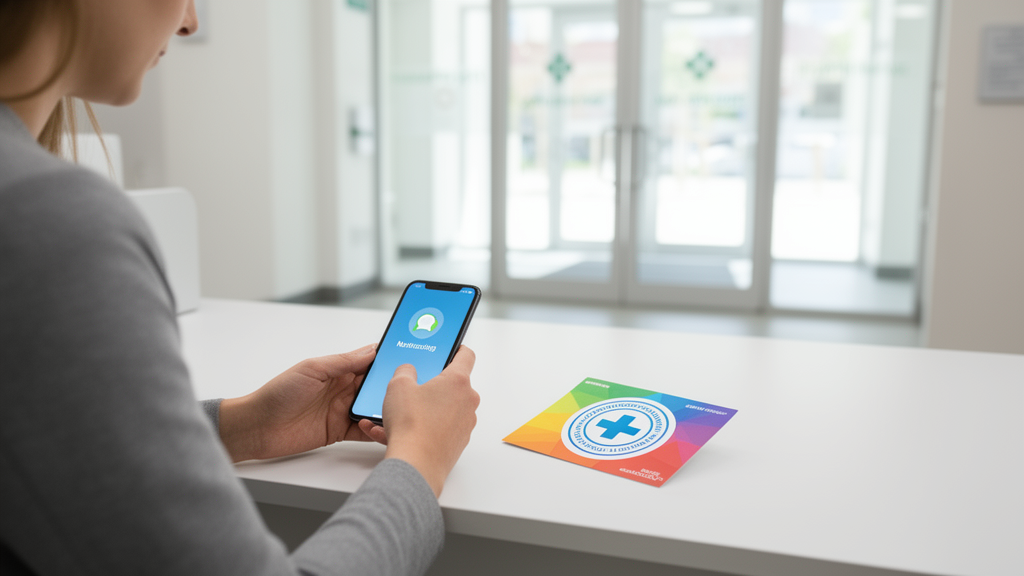
Text message and postcard reminders both significantly increased attendance rates for population-based health checkups in a pragmatic randomized controlled trial conducted in Japan, with two text messages yielding the highest overall participation. Published in BMC Public Health by Hiroshi Murayama, Yuta Takahashi, and Setaro Shimada, the study evaluated scalable interventions designed to address low participation in routine community health screening programs by directly comparing traditional mailed notices with mobile phone communications.
The research focused on a central implementation issue in public health delivery: low uptake frequently limits the reach and overall effectiveness of population-based health checkup programs. Because identifying practical, scalable approaches to improve attendance is essential for health systems, the investigators designed a pragmatic trial to test whether short message service (SMS) reminders could match or exceed the performance of standard postcard notifications in encouraging subscribers to attend screenings.
The pragmatic trial took place in 2020 within the municipal National Health Insurance Program in Yokohama City, Kanagawa Prefecture, Japan. The study sample was drawn from 52,421 municipal insurance subscribers aged 40 to 74 years who possessed a mobile phone number registered with the system. Eligible participants were randomly assigned to one of five study conditions: a control group receiving no reminder, an active comparison group receiving a postcard reminder, or one of three digital intervention groups scheduled to receive one, two, or three SMS reminders.
Before conducting the final evaluation, researchers excluded individuals who died or moved out of the municipality, resulting in an analytical cohort of 51,241 participants. An operational disruption occurred during the study period when the third scheduled SMS reminder was canceled due to the coronavirus disease 2019 (COVID-19) pandemic. Consequently, subscribers who had been randomized to the three-SMS reminder arm received only two reminders, prompting the research team to combine the two-SMS and three-SMS groups into a single analytical group.
To evaluate the interventions, the researchers ascertained health checkup attendance through March 2021 using municipal administrative records. Across the analyzed cohort, attendance was higher in all reminder arms than in the unprompted control group. Specifically, the observed attendance rate was 17.9 percent among participants who received no reminder, 19.8 percent among those sent a postcard reminder, 20.1 percent for those sent a single SMS reminder, and 21.4 percent for participants who received two SMS reminders.
When comparing the two reminder formats directly, a single SMS reminder produced attendance results that were very close to those generated by the physical postcard reminder. The absolute difference in checkup attendance between the one-SMS group and the postcard group was 0.3 percentage points, with a 95 percent confidence interval ranging from minus 0.8 to 1.4 percentage points, indicating comparable effectiveness between a single text message and a mailed card.
The highest level of participation was observed among participants who received two SMS reminders, demonstrating an absolute attendance increase of 3.5 percentage points compared with the no-reminder control group, supported by a 95 percent confidence interval of 2.6 to 4.4 percentage points. The authors reported that this pattern of elevated attendance remained consistent across different sex and age categories, and was similarly evident among subscribers who had not attended any health checkups during the preceding three years.
In their conclusions, the investigators emphasized that both postcard and SMS reminders increased attendance, with a single digital prompt matching the impact of physical mail. Highlighting that SMS reminders can be sent repeatedly at low marginal cost, the team noted that text messaging represents a scalable and practical option for expanding participation in population-based health checkup programs, particularly among long-term non-attenders. The trial was retrospectively registered in the UMIN Clinical Trials Registry under identifier UMIN000061706 on May 27, 2026.
Subject of Research: Effectiveness of postcard versus SMS reminders on health checkup attendance
Article Title: Postcard versus SMS reminders for population-based health checkup attendance: a pragmatic randomized controlled trial
Article References: Murayama, H., Takahashi, Y., & Shimada, S. (2026). Postcard versus SMS reminders for population-based health checkup attendance: a pragmatic randomized controlled trial. BMC Public Health. https://doi.org/10.1186/s12889-026-30157-7
Image Credits: AI Generated
DOI: 10.1186/s12889-026-30157-7
Keywords: health checkup attendance, SMS reminders, postcard reminders, pragmatic randomized controlled trial, population-based health checkups, Yokohama City, Kanagawa Prefecture, National Health Insurance Program, preventive screening participation, digital health interventions, implementation science, long-term non-attenders, administrative records, COVID-19 trial disruption, BMC Public Health, Hiroshi Murayama
News Source: Ophelia Keating. (November 14, 2026). SMS and Postcard Reminders Increased Health Checkup Attendance in Pragmatic Trial. Scienmag.
We bring you the latest biotechnology news from best research centers and universities around the world. Check our website.
Enter your email address to subscribe to this blog and receive notifications of new posts by email.
Bioengineer.org © Copyright 2023 All Rights Reserved.
Login to your account below
Please enter your username or email address to reset your password.
Bioengineer.org © Copyright 2023 All Rights Reserved.

SMS and Postcard Reminders Increased Health Checkup Attendance in Pragmatic Trial – Bioengineer.org