

To stream CBS 8 on your phone, you need the CBS 8 app.
Next up in 5
Example video title will go here for this video
Next up in 5
Example video title will go here for this video
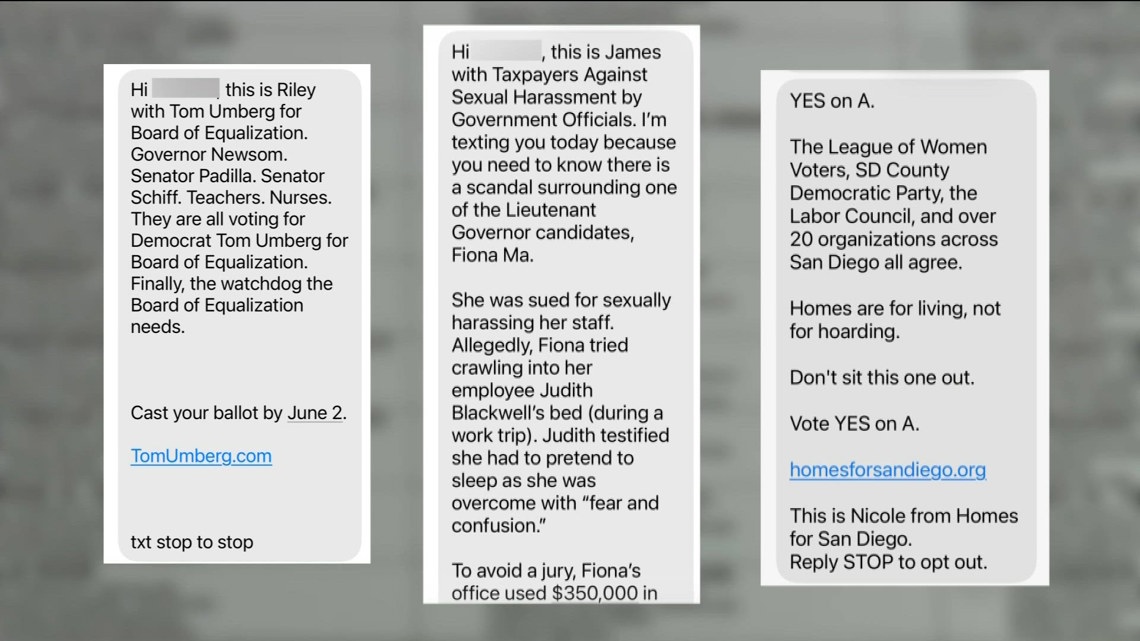
SAN DIEGO — With Election Day just a week away, campaigns are ramping up efforts to reach voters, and one of the most noticeable tactics is the steady stream of political text messages lighting up phones across the region.
Those messages may feel intrusive, but experts say there’s a reason they’re everywhere: they’re cheap, fast and highly effective.
More in Politics
“Text messages have the highest rate of open, and they are able to reach voters and get their message across even if it annoys you,” said political analyst Laura Fink.
Compared to traditional mailers or television ads, texting allows campaigns to reach large, targeted audiences at a fraction of the cost. With the vast amount of voter data available, campaigns can tailor messages to specific demographics, increasing the likelihood that recipients will engage.
For many voters, though, the volume of messages feels overwhelming.
“We’ve been hearing about all kinds of political calls and texts just like almost terrorizing people,” said Teresa Murray with CALPIRG.
So, how are campaigns getting access to so many phone numbers? According to consumer advocates, the answer often lies in actions people may not even remember.
You may have unknowingly given consent when signing a petition, donating to a campaign, or even filling out forms online.
“You really have to read the fine print because they don’t necessarily make it easy for you to understand that yes, you’re giving them consent to contact you anywhere and everywhere all the time,” Murray said.
While that can be frustrating, there are ways to cut down on the messages. Experts recommend blocking numbers directly from your phone by opening the message, tapping the contact, and selecting the “block” option.
Another effective method is simply replying to the text.
“If you get a text regardless [of] whether you think you consented to it or not, just reply STOP,” Murray said. “And they have to take you out. You can revoke your consent at any time.”
Even so, political texting is unlikely to disappear anytime soon.
“I think we’re going to see, whether you like it or not, a lot of text messaging as long as it remains effective,” Fink said.
The good news for frustrated voters is that the flood of messages is expected to stop after Election Day. But the break may be short-lived, as outreach efforts are expected to ramp back up before the general election in November.