

The first StrictlyVC of 2026 hits SF on April 30. Tickets are going fast. Register now.
Buy one Disrupt pass, and get the second at 50% off. Ends May 8. Register now.
Latest
AI
Amazon
Apps
Biotech & Health
Climate
Cloud Computing
Commerce
Crypto
Enterprise
EVs
Fintech
Fundraising
Gadgets
Gaming
Google
Government & Policy
Hardware
Instagram
Layoffs
Media & Entertainment
Meta
Microsoft
Privacy
Robotics
Security
Social
Space
Startups
TikTok
Transportation
Venture
Staff
Events
Startup Battlefield
StrictlyVC
Newsletters
Podcasts
Videos
Partner Content
TechCrunch Brand Studio
Crunchboard
Contact Us
Police have arrested and brought 44 charges against three men for allegedly operating an SMS blaster in downtown Toronto. The scheme, which began in November 2025, is the “first known instance” of an SMS blaster operating in Canada, according to the police report.
In a statement, the Toronto Police Service said it believes tens of thousands of devices were blasted with spammy text messages over several months.
SMS blasters work by spoofing cell towers and broadcasting a stronger signal than other towers in range in order to trick nearby cell phones and tablets into connecting with the blaster. Once connected to nearby devices, an SMS blaster can send out thousands of text messages, which may contain links to phishing sites that impersonate login pages of legitimate businesses. Such devices exploit security weaknesses in older 2G cellular networks to send these messages.
The scheme aimed to steal people’s usernames and passwords, including banking credentials, said Lindsay Riddell, a Detective Sergeant with the Toronto Police, in a press conference.
The police said such devices disrupt nearby cellular communications and interfere with 911 emergency services.
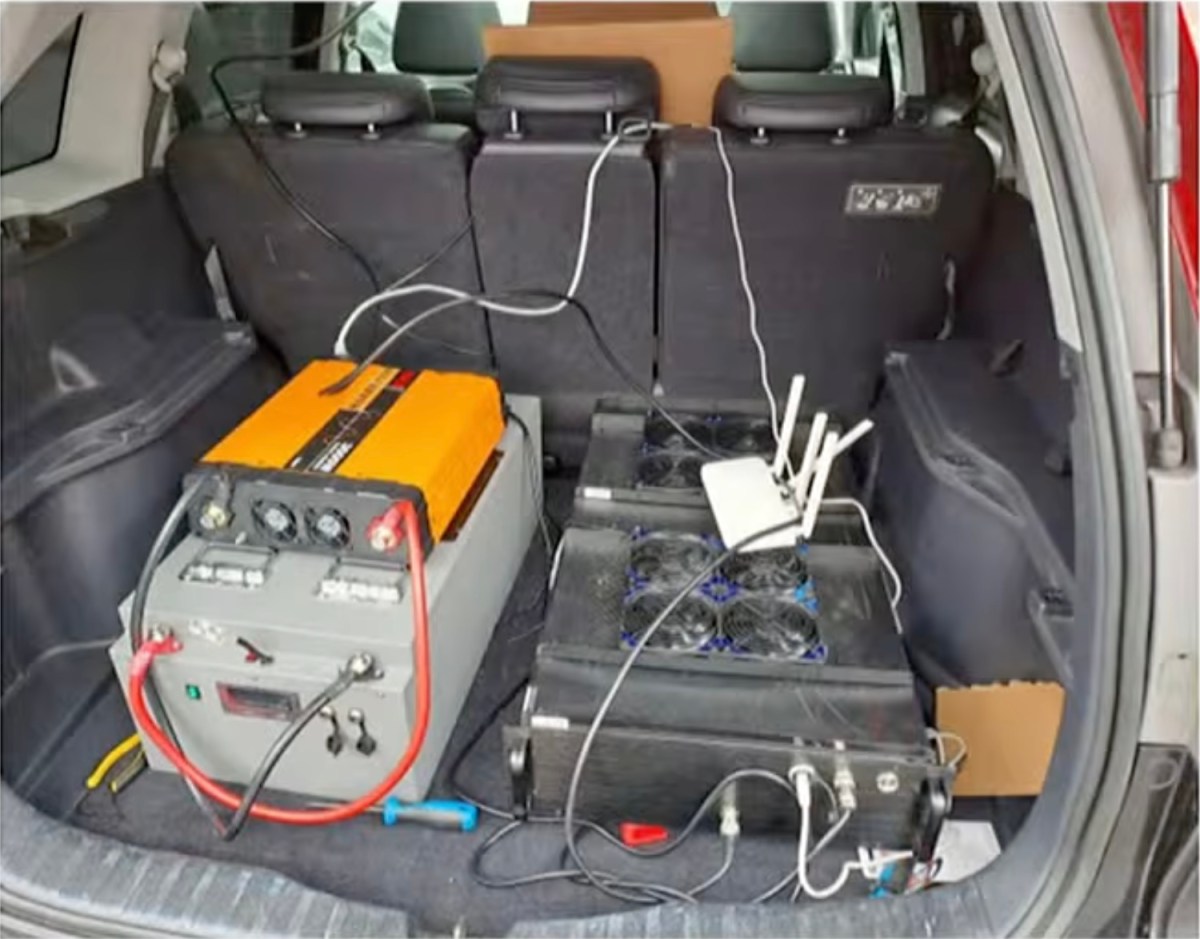
The police have released a photo of a similar SMS blaster found in the United Kingdom during an earlier investigation (pictured above), but declined to share a photo of the blaster found in Toronto, citing safety reasons.
Authorities said the SMS blaster was “uniquely built,” and was operated from the back of a vehicle, allowing the device to be used in multiple locations across Toronto.
In 2024, police in Thailand arrested gang members for running a similar SMS blaster out of the back of a truck in Bangkok. The gang members reportedly blasted close to a million text messages over a three-day period.
Users can block attempts by SMS blasters by switching off their phones’ 2G cellular connectivity. Users of Apple devices can turn on Lockdown Mode to switch off their 2G radios.
Topics
When you purchase through links in our articles, we may earn a small commission. This doesn’t affect our editorial independence.
Zack Whittaker is the security editor at TechCrunch. He also authors the weekly cybersecurity newsletter, this week in security.
He can be reached via encrypted message at zackwhittaker.1337 on Signal. You can also contact him by email, or to verify outreach, at [email protected].
StrictlyVC Athens is up next. Hear unfiltered insights straight from Europe’s tech leaders and connect with the people shaping what’s ahead. Lock in your spot before it’s gone.
Hackers steal students’ data during breach at education tech giant Instructure
As workers worry about AI, Nvidia’s Jensen Huang says AI is ‘creating an enormous number of jobs’
Anthropic and OpenAI are both launching joint ventures for enterprise AI services
Ouster’s new color lidar is coming to replace cameras
We’ll take it: A TikToker rallies pledges to buy Spirit Airlines after its abrupt weekend collapse
This tiny, magnetic e-reader could stop you from doomscrolling
Uber wants to turn its millions of drivers into a sensor grid for self-driving companies
© 2026 TechCrunch Media LLC.