Radio Schuman
This is Radio Schuman, your new go-to podcast to spice up your weekday mornings with relevant news, insights, and behind-the-scenes from Brussels and beyond.
Brussels, My Love?
From the economy to the climate and the EU's role in world affairs, this talk show sheds light on European affairs and the issues that impact on our daily lives as Europeans. Tune in to understand the ins and outs of European politics.
No Comment
No agenda, no argument, no bias, No Comment. Get the story without commentary.
My Wildest Prediction
Dare to imagine the future with business and tech visionaries
The Big Question
Deep dive conversations with business leaders
Euronews Tech Talks
Euronews Tech Talks goes beyond discussions to explore the impact of new technologies on our lives. With explanations, engaging Q&As, and lively conversations, the podcast provides valuable insights into the intersection of technology and society.
The Food Detectives
Europe's best food experts are joining forces to crack down on fraud. Euronews is following them in this special series: The Food Detectives
Water Matters
Europe's water is under increasing pressure. Pollution, droughts, floods are taking their toll on our drinking water, lakes, rivers and coastlines. Join us on a journey around Europe to see why protecting ecosystems matters, how our wastewater can be better managed, and to discover some of the best water solutions. Video reports, an animated explainer series and live debate – find out why Water Matters, from Euronews.
Climate Now
We give you the latest climate facts from the world’s leading source, analyse the trends and explain how our planet is changing. We meet the experts on the front line of climate change who explore new strategies to mitigate and adapt.
Radio Schuman
This is Radio Schuman, your new go-to podcast to spice up your weekday mornings with relevant news, insights, and behind-the-scenes from Brussels and beyond.
Brussels, My Love?
From the economy to the climate and the EU's role in world affairs, this talk show sheds light on European affairs and the issues that impact on our daily lives as Europeans. Tune in to understand the ins and outs of European politics.
No Comment
No agenda, no argument, no bias, No Comment. Get the story without commentary.
My Wildest Prediction
Dare to imagine the future with business and tech visionaries
The Big Question
Deep dive conversations with business leaders
Euronews Tech Talks
Euronews Tech Talks goes beyond discussions to explore the impact of new technologies on our lives. With explanations, engaging Q&As, and lively conversations, the podcast provides valuable insights into the intersection of technology and society.
The Food Detectives
Europe's best food experts are joining forces to crack down on fraud. Euronews is following them in this special series: The Food Detectives
Water Matters
Europe's water is under increasing pressure. Pollution, droughts, floods are taking their toll on our drinking water, lakes, rivers and coastlines. Join us on a journey around Europe to see why protecting ecosystems matters, how our wastewater can be better managed, and to discover some of the best water solutions. Video reports, an animated explainer series and live debate – find out why Water Matters, from Euronews.
Climate Now
We give you the latest climate facts from the world’s leading source, analyse the trends and explain how our planet is changing. We meet the experts on the front line of climate change who explore new strategies to mitigate and adapt.
The private communications of Ursula von der Leyen are once again under scrutiny.
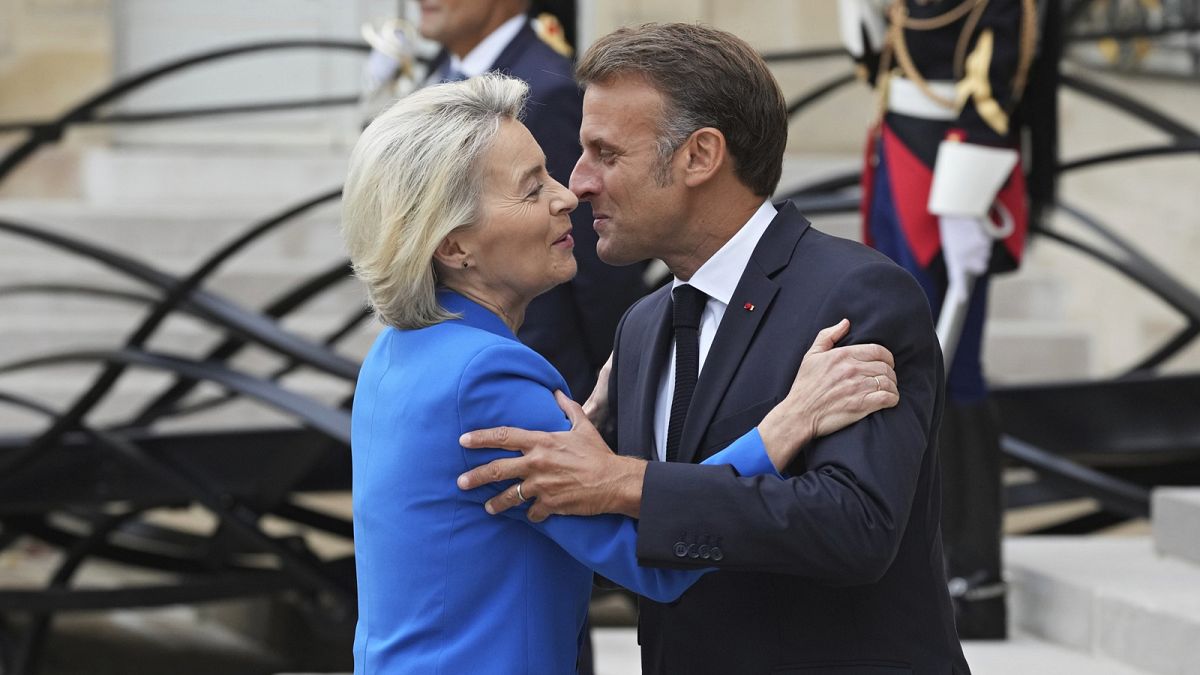
The European Ombudsman has launched an inquiry into how the European Commission handled an external request to release a text message that French President Emmanuel Macron had sent to von der Leyen via the Signal app.
In the message, sent in January 2024, Macron is said to have voiced strong concerns about the EU-Mercosur trade deal and its potentially detrimental impact on French farmers. France is leading the minority of countries that oppose the agreement.
In May 2025, Alexander Fanta, a journalist with Follow the Money, an investigative outlet, asked the Commission to grant public access to Macron’s text.
The executive later confirmed von der Leyen had received the text but noted the content “reiterated a well-established position already communicated by France” and therefore “had no particular administrative or legal effect for the Commission”.
Additionally, the Commission explained that, following security guidelines issued in 2022, von der Leyen activated the “disappearing messages” feature of Signal. Since Macron’s text was not considered relevant enough to be archived, it was automatically deleted.
Fanta’s request for information was subsequently denied.
The journalist contested that the Commission should have preserved Macron’s message due to its effect on the negotiations of the EU-Mercosur deal, concluded in December. He then filed a complaint before the Ombudsman, which has now led to a formal inquiry.
“The Commission admits using auto-delete on VDL’s Signal messages – which means we likely won’t see any of them, ever. Which also means, nobody except the Commission gets to see and decide over whether to keep a document, let alone give access to it,” Fanta wrote on his LinkedIn account.
“That means any form of legal check, judicial review – poof – out of the window.”
On Wednesday, the Commission said it would cooperate with the Ombudsman’s office and defended the use of automatic deletion of private communications.
“On the one hand, it reduces the risk of leaks and security breaches, which, of course, is an important factor in this case. And (on the other hand), a question of space in the phone. The effective use of space in a mobile device,” a spokesperson said.
“The president at all times observed the respective rules.”
The new case bears strong resemblances to the so-called Pfizergate, which prompted a reckoning over transparency in Brussels.
During the COVID-19 pandemic, Ursula von der Leyen gave an interview to The New York Times in which she explained how she had negotiated a vaccine deal worth €2.4 billion direclty with Pfizer CEO Albert Bourla by means of text messages.
The newspaper later submitted a request for information to access those texts, arguing they were relevant to policy-making and therefore deserved to be made public.
The Commission said it could not provide the texts.
After repeated unsuccessful attempts to obtain the messages, The New York Times brought the matter before the EU’s Court of Justice.
In May, the judge ruled that the Commission had not given a “plausible explanation to justify the non-possession of the requested documents”. The executive eventually published a more detailed reasoning, but the Pfizer texts were never released.
 Browse today's tags

Mercosur deal: Von der Leyen being probed for auto-deleting Macron's text – Euronews.com