
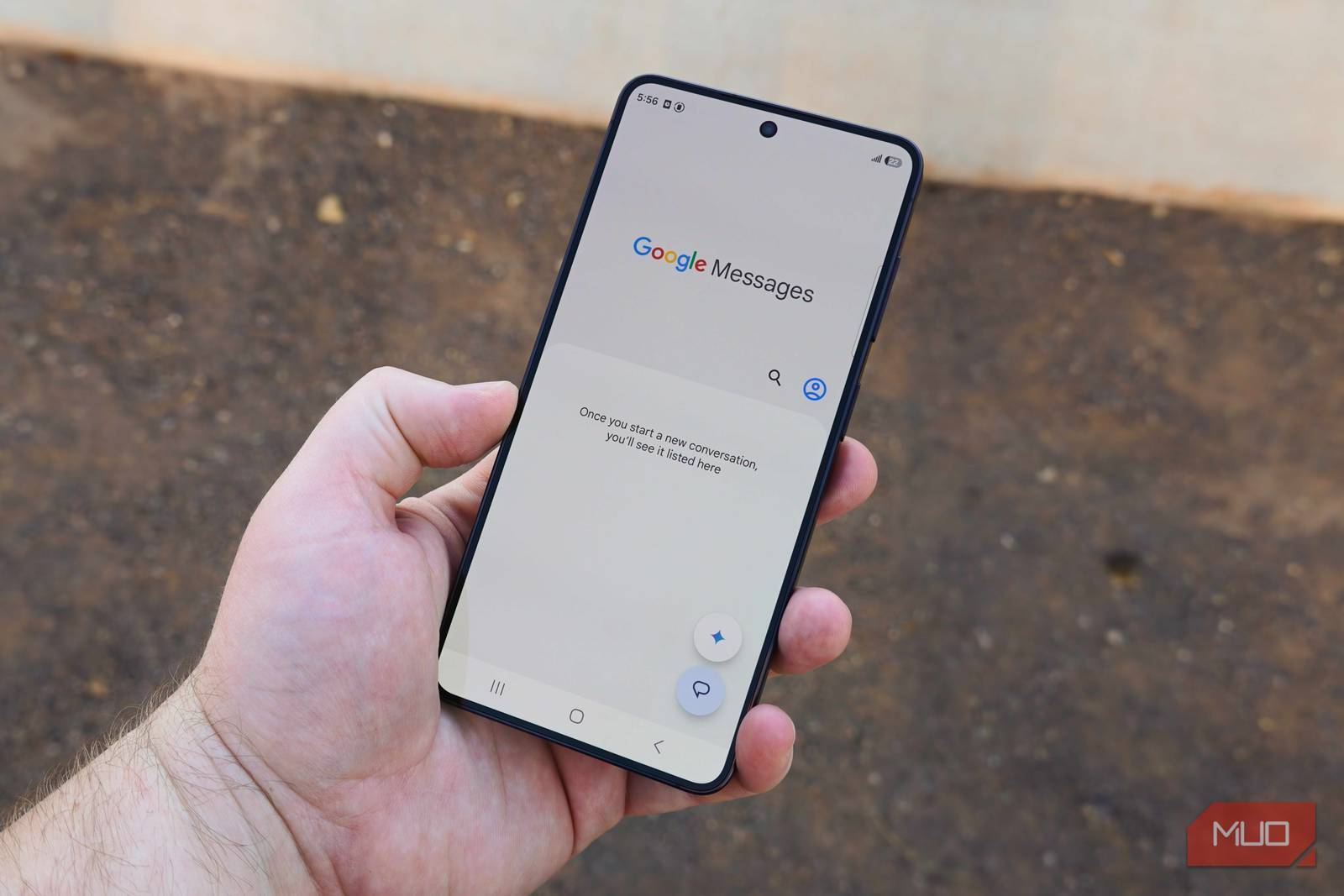

Android messaging needed an overhaul, and the Rich Communication Services (RCS) standard delivered it. It’s an open standard developed by the GSMA, which provides the RCS Universal Profile updates that affect the RCS messaging experience on popular messaging apps. Despite the RCS Universal Profile technically being an open standard, third-party implementations have been few and far between. This is because RCS messaging requires carrier activation and access to a centralized RCS hub server for full functionality.
In other words, it’s not easy for a third-party Android messaging app to bring RCS to its users. To do so, an alternative messaging app would need to partner with an RCS hub to gain access to the universal RCS network. It hasn’t happened yet, except for the now-discontinued Samsung Messages app. Instead, Google Messages is the only way to enjoy end-to-end encrypted RCS chats on Android — giving Google’s messaging app an exclusive perk that no alternative can match.
With Samsung Messages gone and iMessage an iOS exclusive, Google Messages needs to step it up.
Compared to the outdated SMS and MMS texting standards, the RCS Universal Profile brings modern messaging features to Android phones. Higher-quality media, read receipts, delivered badges, reactions, message editing, and message deletion are some of the benefits that come with using RCS chats instead of legacy SMS/MMS.
Best of all, Apple brought RCS support to iPhones with iOS 18, and iOS 26.5 added end-to-end encryption for cross-platform conversations. In other words, RCS significantly improves the security and quality of cross-platform messaging between iOS and Android users.
There was a time when other Android apps, namely Samsung Messages, and cellular carriers tried to make their own RCS messaging implementations. Now, there’s only Google Messages. Rather than use their own solution, the big three U.S. cellular carriers all rely on the Google Jibe backend RCS implementation.
Jibe Hub is a service that integrates separate RCS networks, and Jibe Cloud is the Google network infrastructure carriers can tap into for RCS functionality. So, whether you’re using the Google Messages app on Android or the RCS feature offered by your carrier, it’s all handled by Google Jibe behind the scenes.
For a supposedly open standard, the RCS Universal Profile feels quite locked down — especially in the U.S. To use it, you’ll need either the Apple Messages app on iOS or the Google Messages app on Android. Switching to a third-party Android alternative like Textra or Fossify Messages requires giving up RCS completely. For many Android users, going back to the ancient SMS or MMS standards isn’t an option. It’s Google Messages or bust.
RCS is an open communication protocol, but only on paper. When people think of RCS, they’re really thinking about the concept of universal RCS. Using centralized RCS hubs, chats across messaging platforms, devices, and cellular carriers are automatically routed where they need to go. Without a cloud server handling network access, each RCS network implementation would have to directly connect with every other RCS network. Instead, a single RCS hub links a variety of RCS networks, simplifying cross-platform connections.
Google Jibe is the RCS hub responsible for linking the various RCS networks for most Android users, as it powers the Google Messages app. Since the Google Jibe cloud servers also handle RCS networks for AT&T, T-Mobile, and Verizon, there’s no true third-party alternative for RCS messaging. Of course, these carriers all pre-install Google Messages as the default Android messaging app on their phones, so this shouldn’t come as a surprise.
RCS hubs like Google Jibe currently don’t grant network access and routing infrastructure to startup messaging apps. So, an indie messaging app could make their own RCS apps and host their own servers, but they wouldn’t be able to tap into global carrier networks or the Google Jibe network. The interoperability between RCS servers is what makes the messaging standard attractive to users, and no other Android app besides Google Messages has it.
Once you’ve gotten used to iMessage or RCS, it’s hard to return to legacy SMS/MMS messaging. The technical limitations of those older texting standards create a poor experience, resulting in common issues like broken group chats or low-resolution media. Samsung Messages served as an RCS alternative to Google Messages on Android, but it recently discontinued its app in favor of Google’s first-party solution. It mimics the situation we saw unfold years ago, when AT&T, T-Mobile, and Verizon ditched their in-house RCS networks and began using Google Jibe instead.
With all the major U.S. carriers using Google Jibe for RCS, it’s unlikely that we’ll see third-party RCS apps pop up on Android anytime soon. Google would have to open up access to its network or RCS hub for that to become a reality, and it hasn’t happened yet. For now, if you want all the perks that come with using the RCS Universal Profile, you need Apple Messages or Google Messages. That’s why Google Messages doesn’t have to be the best Android messaging app. It’s the only one to support RCS chats with end-to-end encryption, and that’s enough to keep Android users onboard.
We want to hear from you. Share your perspective in the comments below, and please keep the conversation respectful.
Your comment has not been saved
This space is open for discussion.
Be the first to share your thoughts.
The best of MakeUseOf, directly in your inbox.
By subscribing, you agree to receive newsletter and marketing emails, and accept our Terms of Use and Privacy Policy. You can unsubscribe anytime.