Bangor Daily News
Maine news, sports, politics, election results, and obituaries
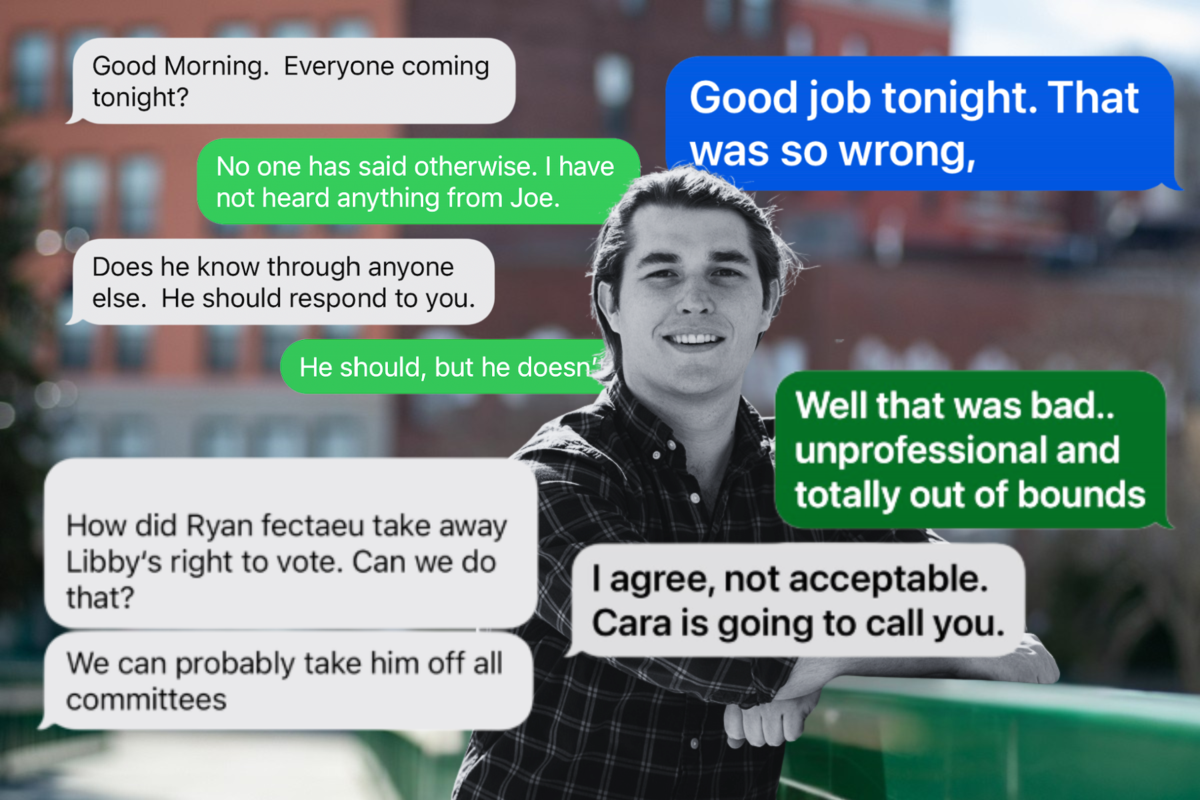
Bangor’s Board of Ethics will launch an investigation into text messages between city councilors who were discussing how to punish one of their own.
The City Council voted 7-2 Monday to move forward with the investigation, which was brought forward by Councilor Joe Leonard.
Leonard’s order asks the ethics board to determine whether his fellow councilors violated the city’s Code of Ethics with their private communications about him after a May 7 budget workshop meeting.
The move is the latest in a monthslong saga set off by accusations Leonard made against a city staff member in the May 7 meeting. City Council voted Aug. 25 to censure Leonard for his comments, which most of the other councilors deemed inappropriate.
Leonard’s allegations center around councilors’ text conversations about his May 7 comments. These messages, which were first reported by the Bangor Daily News and obtained through a Freedom of Access Act request, were one-on-one conversations and included some councilors sharing thoughts about how Leonard should be punished.
The Aug. 25 meeting became heated as councilors and members of the public weighed in on Leonard’s punishment, and Leonard was kicked out while accusing other councilors of violating public meeting law, saying “they had text message relations with each other.”
Other councilors cast doubt on Leonard’s claims in the City Council meeting Monday, but a majority voted to send his question to the ethics board, with some citing worries about transparency.
“When there’s frivolous requests to the ethics committee, it just doesn’t make sense,” said Councilor Dan Tremble. “We’ve got a request because of communications between two councilors that might have happened after a meeting. Two counselors can have these conversations — there’s nothing wrong with that.”
Maine public meeting law requires that public proceedings of “any board, commission, agency or authority” of a municipality be open to the public and that public notice be given for proceedings of a body involving three or more people.
Previous city guidance indicates that members of city government bodies can discuss city matters one-on-one, but can risk accidentally reaching a quorum and violating public meeting law if a group meets with three or more members.
For example, City Solicitor David Szewczyk advised members of the city’s opioid settlement funds committee in July to avoid discussing committee business outside of scheduled meetings, as that could create a conversation that would be considered a public meeting under the law.
“Members of the committee should avoid discussion of substantive matters verbally outside of a committee meeting including by email, text or social media,” Szewczyk said.
“Two people having a conversation about it outside would likely not be considered a meeting, but if you ended up with a quorum of people, then that could be a problem,” he said.
Communications between two people wouldn’t constitute a public meeting for a body such as the Bangor City Council, one legal expert told the BDN.
One-on-one text messages would only be a public meeting if “the body that they are part of only consisted of three members,” said Ben McCall, a municipal lawyer with Drummond Woodsum in Portland.
Tremble and Councilor Rick Fournier voted against sending the matter to the ethics board, with the rest of the council voting in favor.
Councilor Carolyn Fish said she thought it was worth doing the investigation so the issue “doesn’t even create suspicion in the mind of the taxpayers.”
Two members of the public spoke during deliberations, with both in favor of moving forward with the investigation.
The city’s Board of Ethics will review records and potentially request statements from relevant councilors and issue written findings, according to city code. The board has five members and two associate members.
In the meeting Monday, Leonard said he brought the order to the council so its members could get clarity from the ethics board about what sort of communication is and isn’t allowed.
He mentioned “walking quorums,” a practice that has been regulated in some states wherein a series of separate conversations relay information between a larger group of people and effectively become a quorum under the law.
“Walking quorum” does not appear in the city’s code, and McCall said he wasn’t aware of the concept being part of Maine’s freedom of access law.
Your email address will not be published.

Bangor City Council launches ethics investigation into text messages between councilors – Bangor Daily News