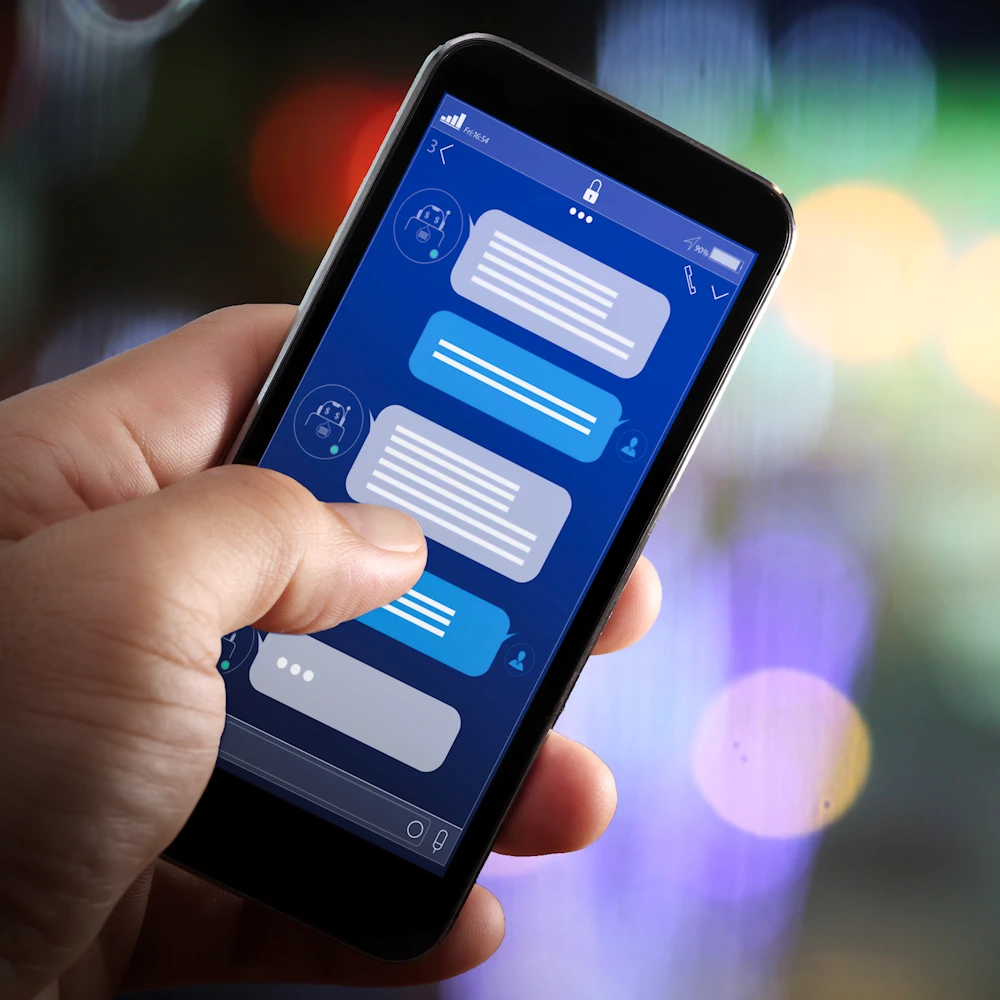
An important development recently happened in Germany as mobile operators switched off the Multimedia Messaging Service (MMS), which meant that users would in future be limited to sending pictures, short videos and audio files to other mobile phone users via internet-based messaging platforms (RCS, WhatsApp, iMessage etc.). But this raises the question, when might the UK follow?
The commercial deployment of MMS started around 2002 and only really became popular alongside the introduction of 3G mobile services a year later, which were much better at being able to send such data over nascent mobile broadband connectivity. Unlike regular SMS (text messaging), MMS also allowed users to send media content like pictures.
Despite this, MMS could be quite restrictive (character and file size limits etc.) and sending an individual message via the cellular network was often far from cheap. Even accidentally sending an emoji alongside your text message, which would often convert it to an MMS, could sometimes rack up quite a bill if such messaging wasn’t included in your plan (this caused plenty of annoyance).
Advertisement
However, the service quickly found itself competing for user attention with internet-based (IP) messaging platforms, which became much more viable as mobile data prices dropped. Services like RCS, WhatsApp, Facebook Messenger and so forth have grown significantly over the past decade or so and don’t suffer the same limitations. Suffice to say that MMS has largely been eclipsed by those IP-based platforms.
Dario Betti, CEO of the Mobile Ecosystem Forum (MEF), told ISPreview:
“UK mobile operators including Vodafone UK, O2 UK, EE and Three continue to support MMS, meaning that it is still available for certain consumer and enterprise use cases.
The UK has a strong CPaaS [Communications Platforms as a Service] ecosystem, advanced A2P [Application-to-Person] messaging market and also increasing adoption of RCS Business Messaging. This means that operators are likely to take a more commercially driven approach to any future migration from MMS. Germany’s experience gives us a useful case study which demonstrates both the opportunities and risks associated with retiring legacy messaging services.
For UK operators, the key lesson is not simply whether MMS should eventually be switched off, but whether the industry has built a sufficiently robust RCS, CPaaS and AI-powered messaging ecosystem to replace the reach, reliability and revenue that legacy services currently still provide.”
Crucially it’s unclear how many people still use MMS in the UK (personally I have only sent a single MMS in the last decade) and thus it’s difficult to gauge the real-world economic impact of its potential removal. ISPreview did contact EE, O2 and VodafoneThree to query what they thought about the change in Germany and when the UK might follow suit.
At the time of writing only O2 has responded. A spokesperson for the operator said they couldn’t rule out switching off MMS “one day in the future“, but they currently have “no active plans” to retire it. Regular readers will know that we always take any mention of “no plans” with a pinch of salt, as plans can and often do change, frequently at short notice. We suspect O2’s position will be the same for EE and VodafoneThree.
As for Germany, by the time mobile operators pulled the plug MMS usage had already plummeted by over 96% from its 2012 peak. German mobile users had already long abandoned the service. The operators that turned the service off also saved money on costly licensing fees, reduced backend maintenance, fewer customer support issues and so forth.
Advertisement
Advertisement
I haven’t sent an MMS message for years. The only advantage of MMS is it doesn’t require mobile data to work. I think that’s a problem with RCS in general, and one they have yet to solve.
MMS requires mobile data but not necessarily internet access.
I’m amazed if anyone still uses MMS given the rip off prices charged. Hopefully as 2G and 3G gets shutdown and spectrum given over to 4G and above data connections will be available in most circumstances for Internet based messaging apps.
Smarty doesn’t charge for MMS and I should think the majority have MMS included with their packages. For people who still use SMS, may use MMS, for a start as it said above if they use Emojis, I just use the standard, smiley stuff. SMS still have a limit of 160 characters, so any more have to be converted into MMS. A friends phone, which is a dumb phone do notify if they go above 160 characters that it will be converted to MMS and charges may apply.
I use SMS all the time, I don’t use the Google messages app because I don’t like it and if I did, I would disable RCS. I use Textra and currently is don’t support RCS.
As Retro pointed out RCS need data to work and if your phone is in a week signal sport, it may not work, SMS is more reliable in that way.
The thing I don’t like about RCS, is that it tells people you are typing. SMS does what I need and that is to send messages.
The only time I’ve sent a MMS in last few years, was by accident, when I sent a Imessage with image, phone lost data connection and accidently pressed the “send as text message” button…. 40p for a silly pic…
@Ad47uk
Vodafone, and at least some of its MVNOs, e.g. Lebara, allow concatenated SMS texts of up to 3 messages in length.
Years ago, If I exceeded 435 chars, the message was automatically converted to MMS, these days it just fails to send, if greater than 3 SMSs in length.
I thought that this was standard practice, but obviously not, unless Ad has some restriction set on his phone/account.
Are the limits, for the various operators, published anywhere?
Not that it matters very much, since virtually all of my messages are sent using Signal these days.
It was always expensive, usually not included in the plan, charged extra in roaming despite having allowance and the most important: clips/images were low resolution/quality even when viewed on the mobile screen. Please let it die.
The one use I’ve seen of MMS is group messaging where the group can’t (or doesn’t wish to) agree on a single OTT app for them all to use.
MMS was almost designed to result in unexpected extra charges.
It should have been shut down long ago.
Only used it once by accident and never again. I am sure there was an option in my phone to disable them. I wasn’t being charged when whatsapp is free
Comments RSS Feed
Your email address will not be published.

Assessing the Future Withdrawal of UK Mobile MMS Picture Messaging – ISPreview UK