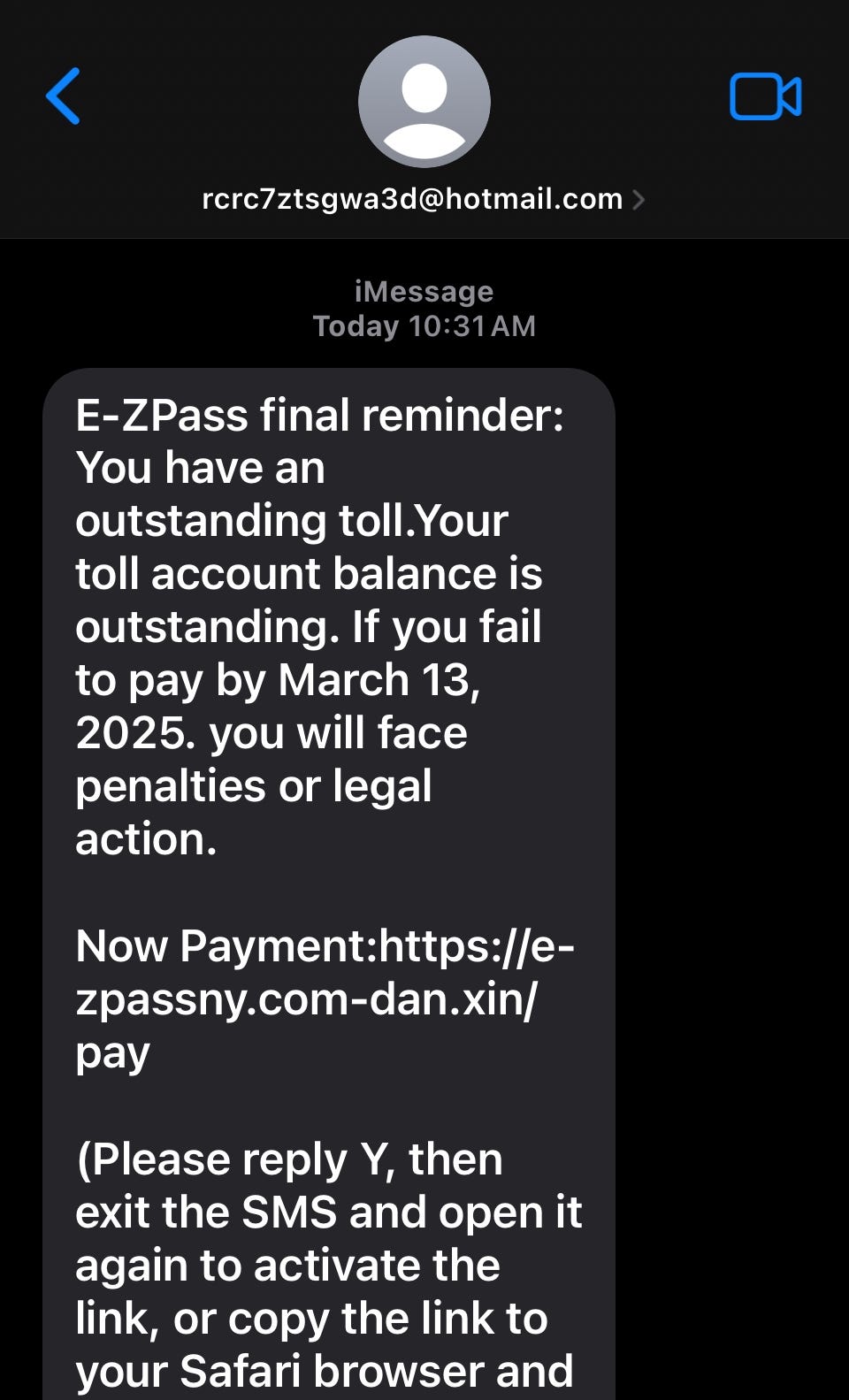
Did you get a text message demanding that you pay a toll bill within the next 48 hours using the payment link provided?
The Federal Bureau of Investigation is warning of a phishing scam going around that could put many Texans' personal information at risk. TxDOT and the Better Business Bureau have also warned people to be aware of fake text messages asking them to pay unpaid toll fees.
If you've received any of these texts, here is what you need to know.
Advertisement
Article continues below this ad
The FBI is alerting smartphone users in the U.S. to remove deceptive text messages that seem to originate from toll road services, delivery companies, and government agencies. These recent smishing scams — phishing attacks via SMS — have exploited over 10,000 newly registered domains, using fraudulent payment requests to obtain personal and financial information.
According to the FBI, the Internet Crime Complaint Center (IC3) has received over 2,000 complaints related to fraudulent toll payment messages. The text says you owe money on an outstanding balance and you have a day to pay it off. It then asks you to click the link to make a payment to avoid late fees.
Even if someone has unpaid toll fees, Adam Hammons, TxDOT media relations director, said the agency does not send out notices through text about a past due bill notice.
Advertisement
Article continues below this ad
According to TxDOT, there have been multiple reports of TxTag customers receiving text messages claiming to have a balance due or past due. These SMS text phishing scams are also known as smishing.
Here's how to know you're getting scammed:
Advertisement
Article continues below this ad
If you're getting weird texts and phone calls and numbers you don't recognize, there could be smishing attempts to scam you.
Smishing is a form of phishing, the fraudulent practice of sending messages disguised as a reputable source to induce individuals to reveal personal and/or financial information, such as social security numbers, credit and debit card numbers, and account passwords.
Smishing, specifically, is done through text messaging.
Advertisement
Article continues below this ad
A victim of smishing typically receives a deceptive text message from a scammer pretending to be a government agency, bank, or other institution, like the USPS.
If you believe you have received a deceptive message from a sender disguised as the USPS, report the message via email to [email protected]. Take the following steps to file a report:
Advertisement
Article continues below this ad
The U.S. Postal Inspection Service will contact you if further information is needed.
If you receive a smishing message unrelated to the USPS, forward the message to 7726 and file a report with the Federal Trade Commission or the FBI's Internet Crime Complaint Center.
Marley Malenfant is a 10-year multimedia journalist who’s worked in print, digital, and broadcast. His prior work includes working in West Texas as a TV reporter for KTXS. During his time there, he covered education, sports, features, and breaking News. He’s skilled in front of the camera as well as behind it. He was a freelance writer, published in D Magazine, Dallas Morning News, SB Nation, Dallas Observer, and was a personality for “The Coach Brothers” sports radio show. Outside of journalism, he was an educator in the Dallas area. He was a 2012 Mayborn Literary Nonfiction Conference grant recipient. In 2021, he was part of the NABJ student multimedia project. He graduated with a paralegal degree from El Centro in 2023. Currently, he’s a trending news reporter for the Austin American-Statesman, covering breaking News, sports, music, and legal trends.
About
Contact
Services
Account

Did you get a text about unpaid Texas toll bill? FBI says to delete these smishing texts – statesman.com