

39
New Articles
Find Your Next Job !
Received an email from Andrew Perrong this morning entitled: “Prepare for the onslaught of 64.1601 claims.”
Attached was this case: Caller ID Claim
He wasn’t kidding.
This is a complete disaster.
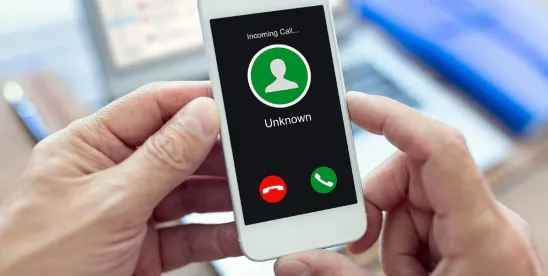
In Newell v. JR Capital, 2:25-cv-01419-GAM (E.D. Pa. July 16 , 2025) the court expanded Dobronski’s big recent win against Selectquote holding a marketer must identify itself on a caller ID if the service is available.
The Court went on to hold the requirement applies o SMS messages.
To get there the court determined 47 CFR § 64.1601(e) was promulgated under 227(c) authority– so a private right of action exists. Here is the conclusion reached by the court:
In sum, the administrative history unequivocally demonstrates that caller ID is a network technology, assessed by the FCC as one available method to protect residential telephone subscribers’ privacy rights under § 227(c). See Dobronski v. Selectquote Ins. Servs., No. 23-12597, 2025 WL 900439, at *3 (E.D. Mich. Mar. 25, 2025) (“The agency record thus suggests that caller ID requirements are a telephone network technology or other alternative that the FCC required in an attempt to help consumers enforce their privacy rights against telemarketers. That places § 64.1601(e) in the heartland of § 227(c).”).
A dude without a lawyer beat a #biglaw firm and now the rest of us have to deal with the consequences.
And, no surprise, the law firm Perrong just whipped in Newell? Also a #biglaw firm.
Sigh.
Hire big law. Expect a big loss.
It gets worse though. Much much worse.
The Court also determined the caller ID requirement applies to text messages:
Finally, the meaning of technical terms used within subsection (e) also show that (e) applies to text messages. Under § 64.1601(e), “[a]ny person or entity that engages in telemarketing . . . must transmit caller identification information.” Caller identification information is defined as “information provided by a caller identification service regarding the telephone number of, or other information regarding the origination of, a call made using a voice service or a text message sent using a text messaging service.” 47 C.F.R. § 64.1600(c) (emphasis added).17 Therefore, § 64.1601(e) specifically covers text messages.
Hmmm.
Notably the texts at issue DID provide a correct phone number and several even included a link to the sender’s website. But the texts did not submit caller ID information. So the court allowed the claim to proceed.
I am being a bit thin on analysis here intentionally. Call me and we can discuss.
This is a HUGE deal though.
And, per usual, we were WAY ahead of other law firms on this. We told you this was coming back in April.
Key take aways:
More soon.
More Upcoming Events
Sign Up for any (or all) of our 25+ Newsletters
You are responsible for reading, understanding, and agreeing to the National Law Review’s (NLR’s) and the National Law Forum LLC’s Terms of Use and Privacy Policy before using the National Law Review website. The National Law Review is a free-to-use, no-log-in database of legal and business articles. The content and links on www.NatLawReview.com are intended for general information purposes only. Any legal analysis, legislative updates, or other content and links should not be construed as legal or professional advice or a substitute for such advice. No attorney-client or confidential relationship is formed by the transmission of information between you and the National Law Review website or any of the law firms, attorneys, or other professionals or organizations who include content on the National Law Review website. If you require legal or professional advice, kindly contact an attorney or other suitable professional advisor.
Some states have laws and ethical rules regarding solicitation and advertisement practices by attorneys and/or other professionals. The National Law Review is not a law firm nor is www.NatLawReview.com intended to be a referral service for attorneys and/or other professionals. The NLR does not wish, nor does it intend, to solicit the business of anyone or to refer anyone to an attorney or other professional. NLR does not answer legal questions nor will we refer you to an attorney or other professional if you request such information from us.
Under certain state laws, the following statements may be required on this website and we have included them in order to be in full compliance with these rules. The choice of a lawyer or other professional is an important decision and should not be based solely upon advertisements. Attorney Advertising Notice: Prior results do not guarantee a similar outcome. Statement in compliance with Texas Rules of Professional Conduct. Unless otherwise noted, attorneys are not certified by the Texas Board of Legal Specialization, nor can NLR attest to the accuracy of any notation of Legal Specialization or other Professional Credentials.
The National Law Review – National Law Forum LLC 2070 Green Bay Rd., Suite 178, Highland Park, IL 60035 Telephone (708) 357-3317 or toll-free (877) 357-3317. If you would like to contact us via email please click here.
Copyright ©2025 National Law Forum, LLC
Find Your Next Job !
Received an email from Andrew Perrong this morning entitled: “Prepare for the onslaught of 64.1601 claims.”
Attached was this case: Caller ID Claim
He wasn’t kidding.
This is a complete disaster.
In Newell v. JR Capital, 2:25-cv-01419-GAM (E.D. Pa. July 16 , 2025) the court expanded Dobronski’s big recent win against Selectquote holding a marketer must identify itself on a caller ID if the service is available.
The Court went on to hold the requirement applies o SMS messages.
To get there the court determined 47 CFR § 64.1601(e) was promulgated under 227(c) authority– so a private right of action exists. Here is the conclusion reached by the court:
In sum, the administrative history unequivocally demonstrates that caller ID is a network technology, assessed by the FCC as one available method to protect residential telephone subscribers’ privacy rights under § 227(c). See Dobronski v. Selectquote Ins. Servs., No. 23-12597, 2025 WL 900439, at *3 (E.D. Mich. Mar. 25, 2025) (“The agency record thus suggests that caller ID requirements are a telephone network technology or other alternative that the FCC required in an attempt to help consumers enforce their privacy rights against telemarketers. That places § 64.1601(e) in the heartland of § 227(c).”).
A dude without a lawyer beat a #biglaw firm and now the rest of us have to deal with the consequences.
And, no surprise, the law firm Perrong just whipped in Newell? Also a #biglaw firm.
Sigh.
Hire big law. Expect a big loss.
It gets worse though. Much much worse.
The Court also determined the caller ID requirement applies to text messages:
Finally, the meaning of technical terms used within subsection (e) also show that (e) applies to text messages. Under § 64.1601(e), “[a]ny person or entity that engages in telemarketing . . . must transmit caller identification information.” Caller identification information is defined as “information provided by a caller identification service regarding the telephone number of, or other information regarding the origination of, a call made using a voice service or a text message sent using a text messaging service.” 47 C.F.R. § 64.1600(c) (emphasis added).17 Therefore, § 64.1601(e) specifically covers text messages.
Hmmm.
Notably the texts at issue DID provide a correct phone number and several even included a link to the sender’s website. But the texts did not submit caller ID information. So the court allowed the claim to proceed.
I am being a bit thin on analysis here intentionally. Call me and we can discuss.
This is a HUGE deal though.
And, per usual, we were WAY ahead of other law firms on this. We told you this was coming back in April.
Key take aways:
More soon.
More Upcoming Events
Sign Up for any (or all) of our 25+ Newsletters
You are responsible for reading, understanding, and agreeing to the National Law Review’s (NLR’s) and the National Law Forum LLC’s Terms of Use and Privacy Policy before using the National Law Review website. The National Law Review is a free-to-use, no-log-in database of legal and business articles. The content and links on www.NatLawReview.com are intended for general information purposes only. Any legal analysis, legislative updates, or other content and links should not be construed as legal or professional advice or a substitute for such advice. No attorney-client or confidential relationship is formed by the transmission of information between you and the National Law Review website or any of the law firms, attorneys, or other professionals or organizations who include content on the National Law Review website. If you require legal or professional advice, kindly contact an attorney or other suitable professional advisor.
Some states have laws and ethical rules regarding solicitation and advertisement practices by attorneys and/or other professionals. The National Law Review is not a law firm nor is www.NatLawReview.com intended to be a referral service for attorneys and/or other professionals. The NLR does not wish, nor does it intend, to solicit the business of anyone or to refer anyone to an attorney or other professional. NLR does not answer legal questions nor will we refer you to an attorney or other professional if you request such information from us.
Under certain state laws, the following statements may be required on this website and we have included them in order to be in full compliance with these rules. The choice of a lawyer or other professional is an important decision and should not be based solely upon advertisements. Attorney Advertising Notice: Prior results do not guarantee a similar outcome. Statement in compliance with Texas Rules of Professional Conduct. Unless otherwise noted, attorneys are not certified by the Texas Board of Legal Specialization, nor can NLR attest to the accuracy of any notation of Legal Specialization or other Professional Credentials.
The National Law Review – National Law Forum LLC 2070 Green Bay Rd., Suite 178, Highland Park, IL 60035 Telephone (708) 357-3317 or toll-free (877) 357-3317. If you would like to contact us via email please click here.
Copyright ©2025 National Law Forum, LLC