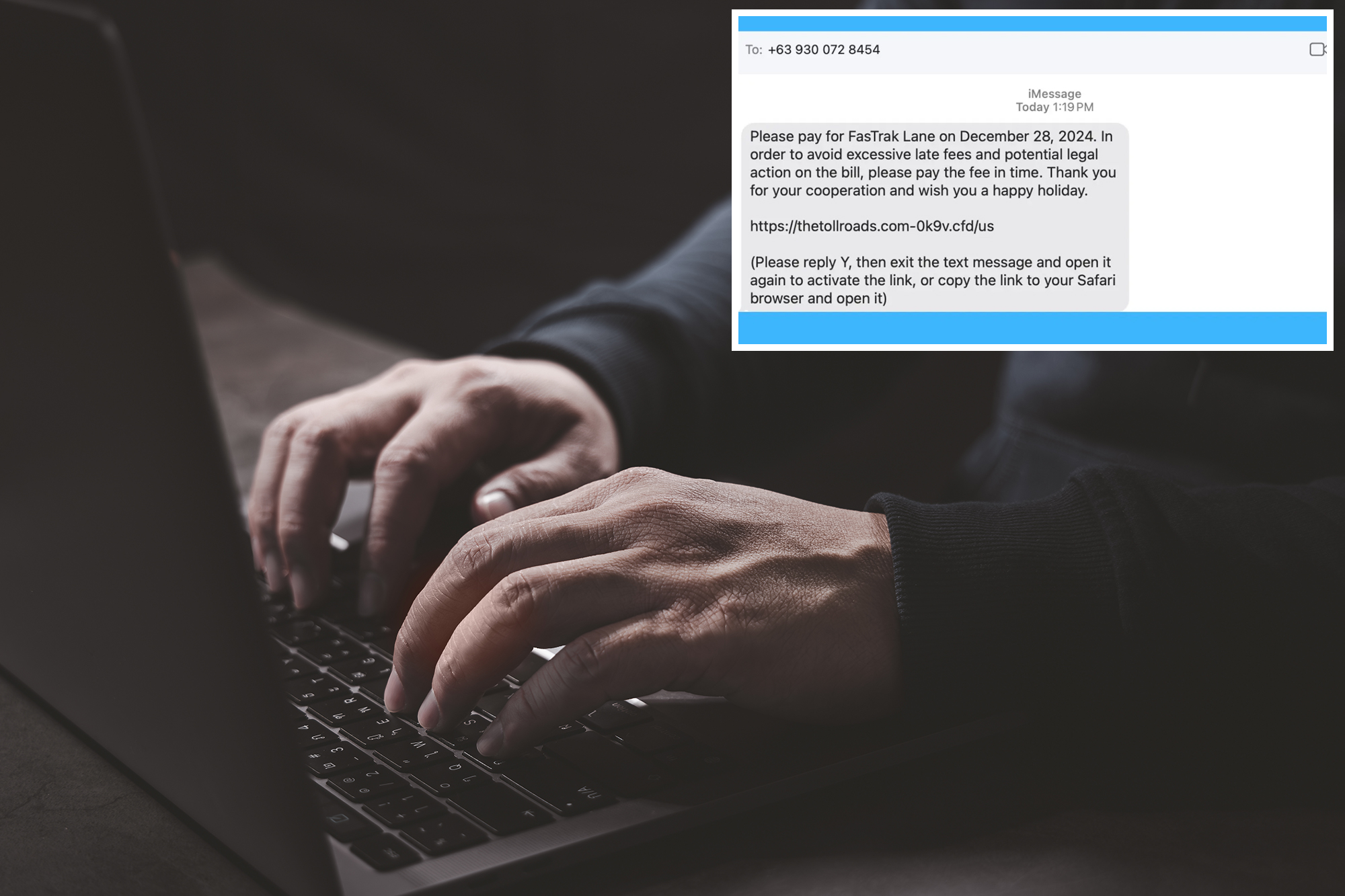
A new scam has come to light targeting residents across the United States with text messages that pretend to be from toll road operators. For many who receive these messages, it’s an easy and expensive trap to fall into.
The scam begins when people receive a message claiming they have unpaid tolls and may be charged fines. Scammers then ask for card details and a one-time password sent via SMS to steal their money. Security researchers believe that Chinese smishing groups are behind this scam, selling SMS-based phishing kits to thousands of scammers.
As reported by KrebsOnSecurity, the scam begins with a text message claiming to be from a toll road operator, such as E-ZPass or SunPass. The message warns about unpaid tolls and the possibility of fines, forcing recipients to act quickly. Victims are directed to a fake website mimicking the toll operator’s site, where they are asked to provide sensitive information, including payment card details and one-time passwords.
Security researchers have traced the scam to Chinese smishing groups known for creating and selling sophisticated SMS phishing kits. One such kit, “Lighthouse,” makes it easy for scammers to spoof toll road operators in multiple states. These kits are designed to trick users into sharing financial information, which is then used to commit fraud.
Reports of these phishing attacks have surfaced across the U.S., targeting users of toll systems like EZDriveMA in Massachusetts, SunPass in Florida and the North Texas Toll Authority in Texas. Similar scams have been reported in states including California, Colorado, Connecticut, Minnesota and Washington. The phishing pages are mobile-optimized and won’t load on non-mobile devices, making them even more deceptive.
Recent advancements in phishing kits include better deliverability through integration with Apple iMessage and Android’s RCS technology, bypassing traditional SMS spam filters. These methods increase the likelihood of victims receiving and engaging with fraudulent messages. The phishing sites are operated dynamically in real time by criminals, making them harder to detect and shut down. Even individuals who don’t own a vehicle have reported receiving these messages, indicating random targeting.
By staying vigilant and following the steps below, you can protect yourself from falling victim to toll scams.
Advertisement

Fake toll road texts sweep America as Chinese scammers target US drivers – New York Post