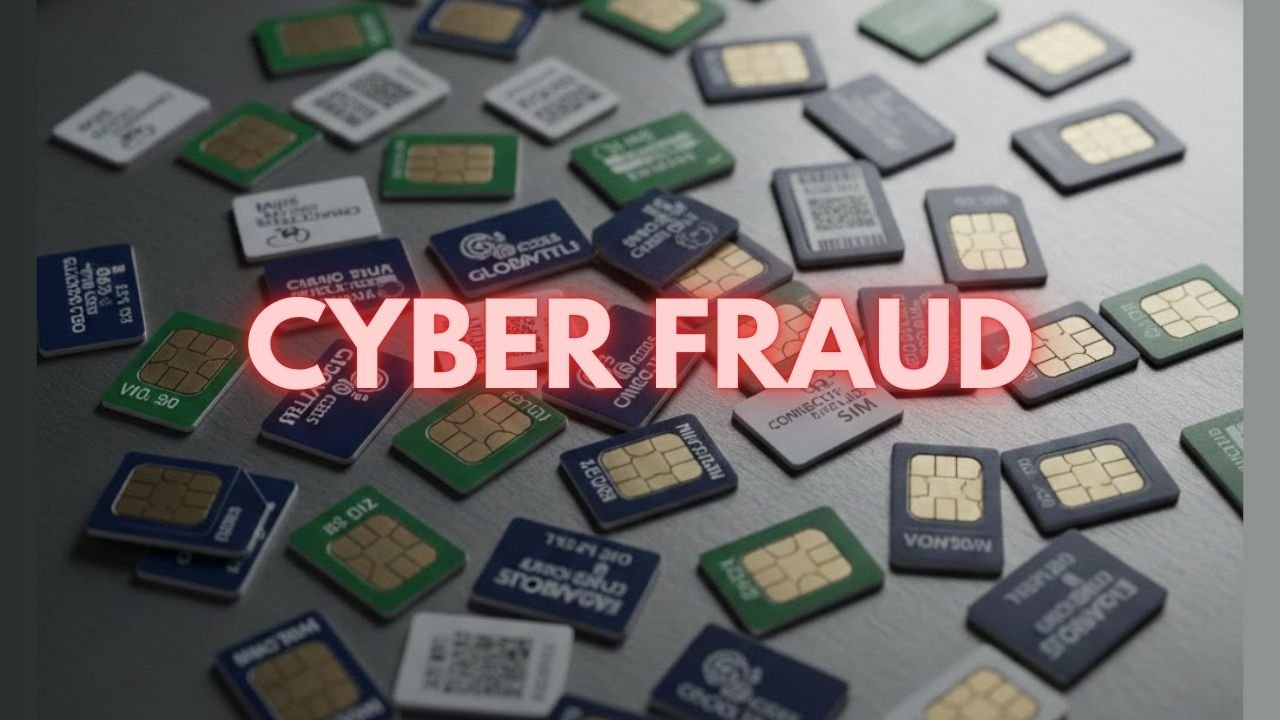
New Delhi | Tightening its grip on cybercrime networks, the Central Bureau of Investigation (CBI) has arrested three accused and unearthed a major syndicate involved in sending phishing messages across the country. The gang was providing large-scale bulk SMS services to cybercriminals who were cheating citizens through fake digital arrest, loan and investment scams. Investigations revealed that more than 21,000 SIM cards were procured in violation of Department of Telecommunications (DoT) norms and were being operated through an online control platform.
The operation was part of the agency’s ongoing “Operation Chakra-V”, which targets organised cybercrime syndicates. The CBI analysed thousands of fraudulent messages received daily by citizens, which lured them into sharing personal and financial information under the pretext of lucrative offers, loan approvals or government verifications.
FCRF Launches Flagship Compliance Certification (GRCP) as India Faces a New Era of Digital Regulation
According to the agency, the arrested individuals have been identified as Sonveer Singh, Maneesh Upreti, and Himalaya. Preliminary findings indicate that the accused were operating from the National Capital Region (NCR) and Chandigarh, running an illegal SMS service that supplied phishing capabilities to multiple cybercriminal groups across India.
The CBI stated that the racket was being run through a company named Lord Mahavira Services India Private Limited. The firm had created a sophisticated illegal infrastructure that allowed fraudsters to send bulk SMS messages impersonating banks, financial institutions, and government agencies. These messages offered fake loans, investment schemes, and other benefits to trick people into sharing their personal and banking credentials.
Based on technical inputs from the DoT and the Sanchar Saathi portal, the agency registered a formal case against the company and carried out extensive searches at multiple premises in Delhi, Noida, and Chandigarh.
During the raids, CBI teams discovered a fully functional and automated system designed to send lakhs of phishing messages daily. The seized items included servers, communication devices, USB hubs, internet dongles, and thousands of active SIM cards. This setup, officials said, was the core of the network that facilitated the mass circulation of fraudulent SMSes across India.
The agency also recovered crucial digital evidence, a significant amount of unaccounted cash, and cryptocurrency. Early findings suggest that some channel partners and employees of telecom companies were complicit in illegally procuring and activating the SIM cards used in the fraud.
A senior CBI official described the arrests as one of the key breakthroughs under Operation Chakra. “This operation reflects our sustained coordination with multiple agencies — including the Department of Telecommunications, Financial Intelligence Units, and cyber security organisations — to identify and dismantle such networks,” the officer said.
The agency believes the racket may have international links, with possible connections to cross-border cybercrime and call centre fraud networks operating from neighbouring countries. Investigations are underway to trace the global footprint of the operation.
The CBI has urged citizens to remain cautious and avoid clicking on suspicious links or responding to messages promising loans, investments, or government benefits. The agency warned that victims often end up sharing One-Time Passwords (OTPs) or sensitive banking details, leading to large-scale financial fraud.
Officials confirmed that the agency will continue its drive under Operation Chakra, expanding its focus to telecom intermediaries, fintech facilitators, and data brokers suspected of supporting cybercriminal networks. The goal, CBI said, is to build a coordinated national defence against digital financial crimes.
The CBI’s crackdown exposes the depth of the phishing ecosystem thriving in India’s digital economy. The seizure of 21,000 SIM cards and a fully operational SMS infrastructure highlights how organised and resourceful cybercriminals have become. The real challenge now lies in building a unified strategy among telecom operators, regulators, and enforcement agencies to permanently dismantle such networks and restore public trust in digital communication.
Stay connected for insightful content that not only keeps you informed but also empowers you to navigate the dynamic world of cyber crime, cybersecurity, and digital safety!
© 2017 The420.in. All rights reserved. | Developed by Brainfox Infotech.

21,000 Illegally Procured SIM Cards Used in Cyber Fraud Racket – The420.in