Do you know what you have in your hand when you plug in a USB, scan a QR code, or click on a URL? If this question raised your eyebrows, thinking that everyone knows this, you’re not alone. Technological shortcuts are all around us, in mobile phones, computers, televisions and on product packaging. We use them quite naturally, without thinking about what they actually mean. Today we will take a little excursion into the world of abbreviations that We pronounce or use them every day, but few people know what exactly lies behind them.And believe me, some of them might really surprise you.
Today, it may be slightly in decline, but it is still a well-known medium. DVD is an abbreviation for “digital versatile disc”, which perfectly describes its original purpose, which was to serve video, music and data.
QR code is an abbreviation for “quick response”. It was designed to load and decode quickly, and it does just that. Just point the camera and you’re where you need to be in seconds. By the way, iPhone has a QR code reader implemented directly in the Camera app.
Without SIM cards you won’t enjoy your mobile phone much today. It’s about subscriber identification module, which assigns you a phone number and allows you to access the operator’s network. If you are then wondering what the designation as mini SIM, nano SIM and so on, it’s just a matter of how big the SIM is, or what is needed to fit it into the phone.
While the classic SIM card is a plastic chip that you insert into a slot, eSIM is its digital successor. The abbreviation stands for “embedded subscriber identity module”. The chip is permanently embedded in the device and the profile is uploaded to it “remotely” via an app, by scanning a QR code, etc. It is a more convenient, safer solution that Apple has been betting big since the iPhone XS. In the US, it has even sells new iPhones exclusively with eSIM, so classic SIM slots are slowly disappearing into the abyss of history.
While today they rule messengery, SMS messages they are still here with us. It is a short text messaging service, which was born in the eighties.
One of the most famous foronewho in the world. USB stands for “Universal Serial Bus”, which is the technical name for a peripheral connection system.
LED is a light-emitting diode, which has become synonymous with modern lighting in recent years. They save energy and can be found almost everywhere today.
In short: internet address. A URL specifies exactly where to find content on the Internet., and gives it a structure that browsers understand.
No, it’s not the internet. WWW stands for “World Wide Web”, i.e. a layer of websites that appear above the internet itself.
GPS is the Global Positioning System., which uses satellites to determine precise location. Without it, it would be hard to imagine navigation today – and not just in the car.
It may come as a surprise, but Wi-Fi does not mean “wireless Internet”. It’s just a marketing acronym from “wireless fidelity”, and indicates a standard for wireless networking.
You won’t miss a thing when connecting a TV or monitor. HDMI is an interface for transmitting high-definition video and audio, and all this via a single cable.
HDR means “high dynamic range”, which in practice means greater contrast, detail in highlights and shadows, and more realistic colors – especially in photos and videos.
PDF is a portable document format, which Adobe invented to make documents look the same on any device – and it did it perfectly.
RAM is the operating memory – a place where your phone or computer temporarily stores the data it is currently working with. The more RAM, the smoother the system runs.
Probably the most complicated of today’s abbreviations. CAPTCHA is a test that detects whether you are a human or a robot.And even though it can be annoying at times, it protects us from spam and attacks.
This abbreviation stands for global mobile network standard, which we have been using since the 90s. When we first tried to write an SMS from a brick Nokia, everything ran over the GSM network. Today, 3G, 4G or 5G technologies have joined it, but GSM remains the basis of mobile communications worldwide.
Thanks to this technology, we have on our phonesonesuch beautiful colors and deep black. OLED displays illuminate each pixel individually., so when it’s black, it’s actually off. The result is not only better contrast, but also energy savings. Apple OLED was first deployed at Apple Watch and later for iPhones – today it is the de facto standard for premium displays.
A display technology that uses liquid crystals to display images. Unlike OLED, where each pixel lights up on its own, LCD needs backlight, so blacks are not completely black and colors are not as vivid. Nevertheless, LCD is still very popular due to its availability and good price/performance ratio, especially for larger screens or cheaper devices.
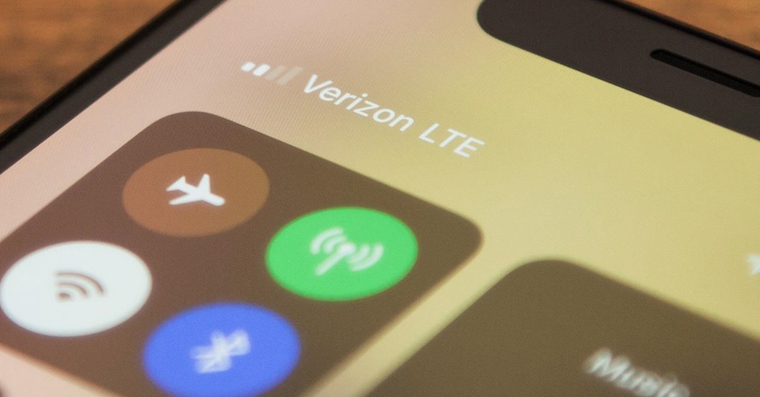
A well-known mobile network technology that represents a fast and efficient standard 4G connectionIt is actually the foundation of modern mobile internet before the advent of 5G, which is still used today by millions of users around the world.
So the next time you see one of these shortcuts on your screen, you might smile. Behind every three-letter (or longer) word there is a rather interesting story. And most importantly, now you know what you’re actually saying and can therefore teach those around you a little lesson.
the entire text

20 tech acronyms we use every day, but few know what they mean – Letem světem Applem