

Home / USA News / Text Message Settlement – Eligible Claimants May Receive Up to $75 Per Message
Sweety
USA News
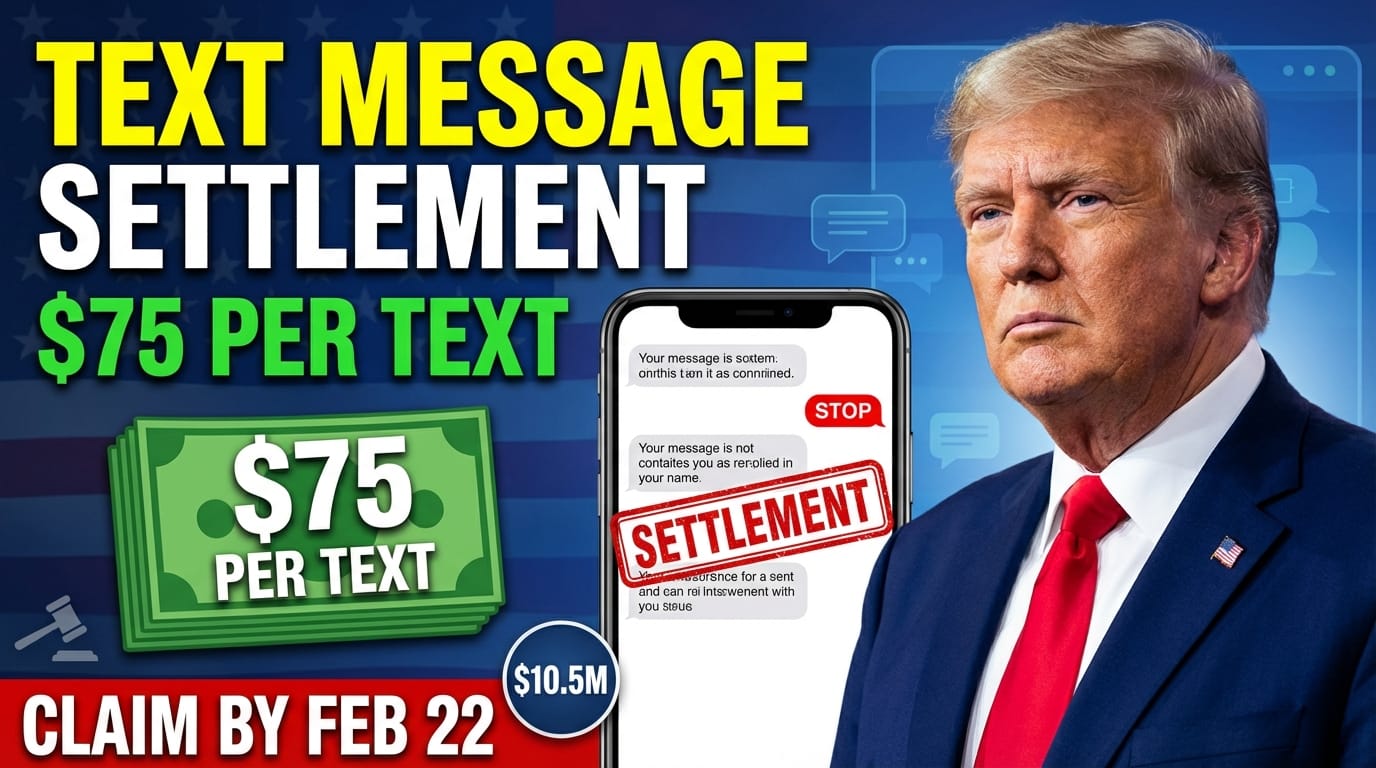
Consumers who received repeated marketing text messages after opting out may be eligible for compensation under a recently approved class action settlement. The case involves Kaiser Foundation Health Plan, commonly known as Kaiser Permanente, and carries a total settlement value of $10.5 million.
Individuals who qualify could receive up to $75 for each eligible text message. The deadline to submit a claim is February 22, 2026.
The settlement addresses allegations that marketing messages continued to be sent even after recipients replied “stop” or submitted a similar opt-out request. While Kaiser denies any wrongdoing, the company agreed to settle to avoid extended litigation and associated costs.
Table of Contents
The settlement applies to individuals in the United States who received more than one marketing text about Kaiser products or services between January 21, 2021, and August 20, 2025, after submitting a clear opt-out request.
A separate group of Florida residents is also included. In Florida, individuals qualify if they received more than one marketing text at least 15 days after opting out.
The court approval was granted in Miami-Dade County. Payments will be issued once the settlement process is fully finalized, including the resolution of any appeals.
Eligible claimants may receive up to $75 per qualifying message. However, the final payout will depend on how many individuals submit valid claims.
Key details include:
Each person may submit only one claim form, which must include all qualifying phone numbers and messages associated with that individual.
To receive payment, eligible individuals must complete and submit a claim form through the official settlement website before the February 22, 2026 deadline.
The website outlines eligibility requirements and documentation instructions. Payments will not be distributed until the court process is complete. If appeals are filed, distribution could be delayed.
Consumers are encouraged to rely on official settlement communications and avoid third-party services that may charge unnecessary fees.
On its surface, the case centers on consumer consent and communication practices. The underlying issue involves allegations that marketing texts continued after recipients clearly requested to stop receiving them.
Federal and state laws regulate commercial messaging, particularly when consumers opt out. Settlements like this one often reflect compliance concerns rather than admissions of wrongdoing.
However, the case also highlights a broader issue tied to digital communication practices.
While a single SMS message has a minimal environmental impact, the cumulative effect of billions of messages worldwide contributes to overall digital energy consumption.
Studies estimate that the global information and communication technology sector accounts for roughly 1.5 percent of total greenhouse gas emissions, with some analyses placing it higher. The healthcare sector itself is responsible for approximately 4 to 5 percent of global emissions.
Unnecessary digital communication increases network traffic, server usage, and device energy consumption. Although the impact of individual marketing texts is small, scaled activity across millions of users can increase energy demand incrementally.
The settlement indirectly underscores the importance of efficient, consent-based communication systems.
For consumers, the immediate consideration is eligibility. Those who believe they received repeated marketing messages after opting out should review settlement details and submit claims if appropriate.
More broadly, the case serves as a reminder to regularly manage digital preferences. Adjusting notification settings, unsubscribing from unwanted communications, and reviewing marketing permissions can reduce unwanted messages.
For healthcare providers and insurers, the matter reinforces the importance of aligning communication strategies with both regulatory requirements and operational efficiency. As healthcare organizations invest in digital outreach, balancing engagement with consent remains critical.
Fewer unwanted messages may reduce compliance risk and improve trust in essential communications such as appointment reminders, lab results, and public health notices.
The February 22, 2026 claim deadline provides eligible individuals with an opportunity to seek compensation. Beyond financial recovery, the case highlights ongoing scrutiny of digital marketing practices in highly regulated industries.
People who got repeated texts after opting out.
Up to $75 per qualifying message.
February 22, 2026.
No, the company denies wrongdoing.
After final court approval is complete.
Feb. 12, 2026
USA News
More than $15 billion in unclaimed property is currently being held by the State of California, and officials are encouraging residents to check whether some
Feb. 11, 2026
USA News
A British biologist working independently has played a central role in uncovering manipulated images in scientific papers funded with US public money. His findings have
Feb. 11, 2026
USA News
Social Security payments are a primary source of income for millions of Americans. To ensure timely distribution, the Social Security Administration (SSA) follows a structured
Feb. 10, 2026
USA News
Millions of Americans rely on Social Security payments each month to help manage everyday expenses. In February 2026, the Social Security Administration continues its standard
Feb. 10, 2026
USA News
A new tax provision aimed at older Americans is set to take effect beginning with the 2025 tax year. Under the One Big Beautiful Bill
Feb. 9, 2026
USA News
The White House continues to signal its support for a strong US dollar, but financial markets appear unconvinced. Despite official rhetoric, investors have kept their
Capitol Skyline is an independent digital news platform committed to delivering clear, accurate, and well-researched journalism. Our focus is on creating content that is reliable, reader-focused, and grounded in verified information.
We follow a careful editorial workflow to ensure every article is accurate, balanced, and genuinely useful. Learn more about our approach on our About Us page.
At Capitol Skyline, all articles are manually written, reviewed, and verified using credible sources. We do not publish AI-generated, promotional, or misleading content. Our editorial standards prioritize clarity, independence, and accuracy in every story we publish.
To understand how we work behind the scenes explore our Editorial Policy, Fact-Checking Policy, Privacy Policy, and Disclaimer pages.