

Daily e-Edition
Evening e-Edition
Sign up for email newsletters
Sign up for email newsletters
Daily e-Edition
Evening e-Edition
Trending:
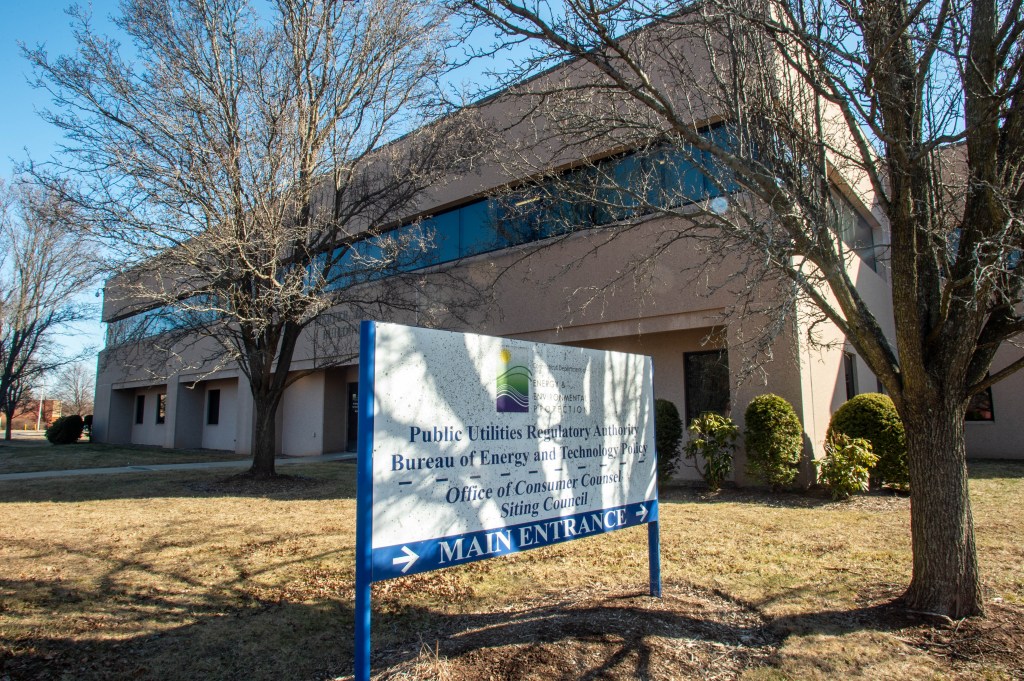
A court on Wednesday ordered the state’s chief utility regulator to submit to questioning under oath by utility lawyers days after she acknowledged deleting — she says inadvertently — a controversial text message exchange that could help explain who was behind an unusual news opinion column vilifying the utility industry.
Superior Court Judge Matthew J. Budzik issued the order late Wednesday concluding in part that the deletion — which occurred months ago but was concealed until Monday — deprived two utility companies suing the Public Utility Control Authority access he had granted them in April to the electronic messages.
Budzik ordered both PURA Chair Marissa Gillett and her chief of staff Theresa Govert to sit for depositions about the text messages and related materials. Budzik also said his earlier April order requiring PURA to disclose materials to the utilities remains in effect. And he said he may order additional disclosure of documents by PURA if the depositions do not “adequately address the issues” raised by the utilities in their suit.
“Within 15 days of the date of this order, the plaintiffs may depose Chairperson Gillett and Chief of Staff Govert concerning the circumstances surrounding the deletion of any documents responsive to the court’s original discovery order as set forth in the April 16th decision, any actions taken to recover any potentially responsive documents, and the circumstances surrounding any review, editing, or commenting upon the December 19th op-ed by Chairperson Gillett and/or Chief of Staff Govert,” Budzik wrote.
PURA and Gillett acknowledged deletion of the message during a hearing Budzik convened Monday to inquire why the materials had not been provided to the two Avangrid subsidiaries, Southern Connecticut Gas and Connecticut Natural Gas, in compliance with his earlier order..
Gillett’s lawyer said at the hearing Monday that the deletion was unplanned and occurred in December when she was using a personal cell phone with an auto delete function to discuss state business with one of the co-chairmen of the Legislature’s Energy and Technology Committee.
“When she purchased a phone in November 2023 it was set to delete text messages after 30 days,” Assistant Attorney General Seth Hollander, who is defending Gillett and PURA from a utility suit involving the text messages, said on Monday. “It is our understanding that when the phone is set to delete automatically they are not retrievable after 30 days.”
Battle between CT utilities and regulators heats up. Elusive ‘draft’ document at center of fray.
Gillett’s acknowledgement of the deletion comes as something of a surprise after months of intrigue in politics and business over what has turned out to be an elusive text exchange, with its reference to an “op ed,” between Gillett and Rep. Jonathan Steinberg.
For months, the utilities have been demanding that they be given access to records and communications associated with the exchange and for just as long, PURA has denied having any such records in its possession.
The deletion of the records and questions about whether the use of personal communication devices by government officials to privately retain and later delete public records conflicts with open government, or FOI laws, has already resulted in one political call for Gillett’s resignation.
In the text exchange at the center of the case, Gillett told Steinberg: “Two quick things: (1) I sent you an overly formal response to your pbr email bc I’m concerned about getting FOIA’d. Let me know if reading between the lines you don’t see what I’m trying to say, and we can chat about it next time we talk! And (2) I finished my draft and waiting for Theresa and others to put eyes on it before sending to you and norm hopefully later today. Thank you!”
Steinberg replied: “Great on both counts. I debated sending you the PBR idea to your private email, which I thought I did weeks ago but you apparently didn’t receive. Not to put you on the spot. I’m at UI in the morning but should be available to review release/op Ed.”
The op-ed was signed by Steinberg and energy committee co-chair Sen. Norm Needleman, D-Essex. It appeared in December in the online publication CT Mirror. The two have said repeatedly that they “wrote and authored” or “penned” the piece. Steinberg later walked back his assertion, saying Needleman wrote it and he edited it.
The two argue that a succession of credit downgrades imposed on the utilities are not the result of bad regulatory decisions, as the utilities and Wall Street ratings agencies were then asserting. Rather, the two wrote, the downgrades were the result of a self-destructive scheme by electric companies to undermine Gillett by arranging with ratings agencies to reduce their own credit worthiness.
Moody’s Ratings: CT has ‘least credit supportive utility regulatory environment’ in US
The Courant first reported on the text message exchange in February and since then the utilities have been trying to obtain the draft referred to by Gillett to determine whether it shows she collaborated on the anti-utility op-ed. Such collaboration could demonstrate bias and open a legal path for the utilities to unwind what they consider adverse, multi-million dollar rate decisions.
Budzik’s preliminary order in April required PURA and Gillett to search records and produce “all documents within its possession and control” concerning the “drafting or authorship of the op-ed.” Earlier this month, PURA filed papers in court saying it had searched repeatedly and exhaustively, but turned up nothing relevant.
Gillett asserted in a sworn affidavit by a PURA lawyer that she and Govert — referred to in the text exchange as reviewing Gillett’s draft — had searched their devices and located no material relevant to Budzik’s order. The affidavit was dated June 6, about six months after Gillett’s cell phone would have automatically deleted the exchange with Steinberg, according to the account given Monday in court.
“Subsequently, I had Chair Gillett and Theresa Govert each confirm in writing that they had conducted the searches of devices and accounts and that all responsive documents had been produced. PURA released all documents responsive to the Order and is not withholding any responsive documents,” the affidavit says.
Asked why PURA waited until Monday to acknowledge that it was unable to produce sought after records because they had been deleted, a spokeswoman for Attorney General William Tong said the office “cannot comment on legal strategy.”
PURA did not respond to multiple questions, including why it did not acknowledge the record deletion earlier and what steps, if any, it has taken to retrieve the deleted material.
In their suit, the two gas companies are challenging PURA decisions late last year that reduced their rates. Both companies are arguing that the rate cut was the result of regulatory bias and are trying to tie Gillett to the anti-utility op ed to support the claim.
Copyright © 2025 Hartford Courant