
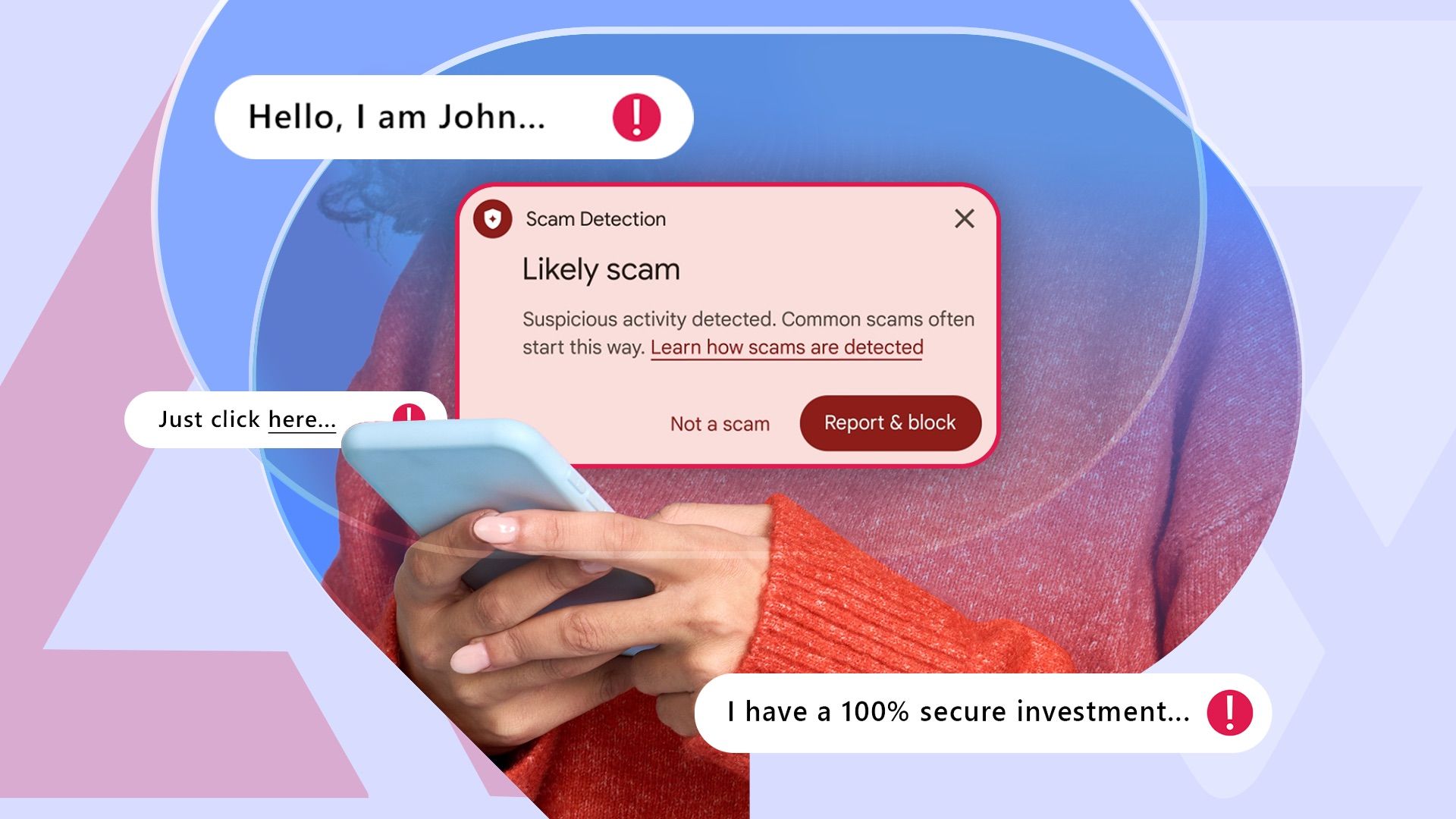

It’s the season of loan apps offering quick approvals and marketers pushing discounts you didn’t ask for. Even with Google Messages’ spam filter turned on, some still slip into my inbox.
Sometimes it’s the same sender using different numbers, so blocking one doesn’t solve it.
I wanted a way to stop the promotions from entering my mobile phone while still keeping useful one-time passwords and account alerts.
I recently noticed that Messages now makes that possible with a built-in unsubscribe button. Here’s how it works.
Promotional business messages are a different breed from email spam. At least, email clients have server-side filters and category tabs that file away junk before it ever pings you.
SMS and RCS are designed for immediate, device-level delivery. That means every unwanted message hijacks your notification shade in real time and competes for attention with the important ones.
Google Messages’ existing spam filter uses machine learning to identify likely junk, but it operates on sender reputation and message patterns. If the same business cycles through multiple numbers or alphanumeric IDs, it slips past the net.
The new unsubscribe feature sends a protocol-level command back to the sender, triggering opt-out logic on their end.
Since action happens on their infrastructure, it’s not tied to your current phone or SIM slot. Hence, it works across devices.
I first saw it as a blue text link at the bottom of a chat from a service I’d long stopped using. It may be hidden under the three-dot menu in the upper-right corner of your device.
Regardless, tapping the option triggers a pop-up message including options to select why I’m unsubscribing. For example, not signed up or too many messages. Choosing Other requires me to type in a reason.
Then the app sends a STOP command over the same protocol the message came in on, be it SMS short code or RCS business channel.
A confirmation appears in the chat showing that the request was sent, along with a Subscribe again link in case I change my mind.
It’s followed by a message from the company. It offers an automated apology about how sorry they are to see me go and instructions for sending START if I ever want back in.
Although I’m rarely touched enough to do it, I consider it a thoughtful gesture. More businesses should practice polite aftercare post-disengagement. It makes the interaction feel more human than transactional.
Google Messages’ unsubscribe feature works for anyone in the US, Brazil, France, Germany, India, Mexico, Spain, or the UK when the conversation is an RCS for Business chat.
If you’re in the US, it also supports SMS or MMS from short codes and alphanumeric senders, for example, 56789 or ShopDeals.
Spain was initially part of the rollout. But Google has since pulled the plug there entirely, so you won’t see the feature at all. The company hasn’t shared an explanation, but its decision is likely tied to market-specific pressure.
If too many people suddenly had a very visible escape button, opt-out rates would spike. It directly hurts advertisers who pay carriers for bulk messaging.
Bulk messaging itself is a paid channel, and advertisers buy delivery slots, where carriers profit from the volume.
Even though you view your messages as personal space, these entities treat them as inventory. When those two perspectives collide, it’s not surprising that companies sometimes prioritize economics over your preference.
In regions where the feature works, the button feels like an example of good marketing.
Any business that believes in the value of its messages shouldn’t fear it. Because if you can respect attention as a scarce resource, you’re already halfway to winning trust.
I’d be more likely to return someday if a business let me walk away freely, rather than chasing me with endless promotions.
I wish there were a giant kill switch for every spammy SMS and RCS promo. But it’s not that simple.
The whole foundation of SMS was built in the 90s, which is even long before bulk marketing and algorithmic spam existed. The protocol treats every message as the same 160-character block of text.
For example, you receive two different messages saying, “Get FREE data! Recharge today & win exciting prizes” and “Your OTP for online banking is 492837.”
The SMS system doesn’t know which is essential (OTP) and which is junk (promo).
There’s no deep metadata to distinguish them. Even RCS, while more modern, still relies on carriers and Google’s servers to deliver messages with minimal filtering.
If you tried to design a rule that blocks all promotional text, you’d almost certainly end up blocking everything important, including airline updates, medical reminders, and government alerts.
Technically, blocking unwanted texts outright would require content labeling and network trust hierarchies.
Content labeling would mean every sender tags a message as transactional or marketing. Some countries like India already mandate it. But it’s enforced through strict telecom regulations, instead of optional software switches.
Network trust hierarchies would mean carriers safelisting verified business channels while downgrading or rejecting unverified senders.
However, it’s so complex that it requires higher costs for small businesses, slows down delivery, and risks false positives where legitimate alerts vanish.
That’s why Google builds layers where it provides device-side spam detection in Messages, the unsubscribe button for RCS senders, and carrier-level guidelines that try to spot obvious scams.
Unsubscribing is but one of many reasons why Google Messages texting is unbeatable.
Between its RCS features, clean delivery of one-time passwords, device-level spam filters, and now a direct way to silence the noise without losing what matters, conversations feel more personal.
Take advantage of features like message reminders. If you open a text but can’t reply right away, the app nudges you later to return to it. Keep OTPs visible by pinning them or letting the system highlight them before they expire.
If you’re switching devices, Google’s cloud backup makes sure your history moves with you securely.
We want to hear from you! Share your opinions in the thread below and remember to keep it respectful.
Your comment has not been saved
This thread is open for discussion.
Be the first to post your thoughts.
Everything old is new again
There are dozens of us!
The redesign is now live via the Play Store
I moved most of my wallet’s contents to my phone
The Pixel 10 is the first phone family in the US with Bluetooth 6, representing a serious effort to clean up the messy state of wireless connections
Flipping good fun