
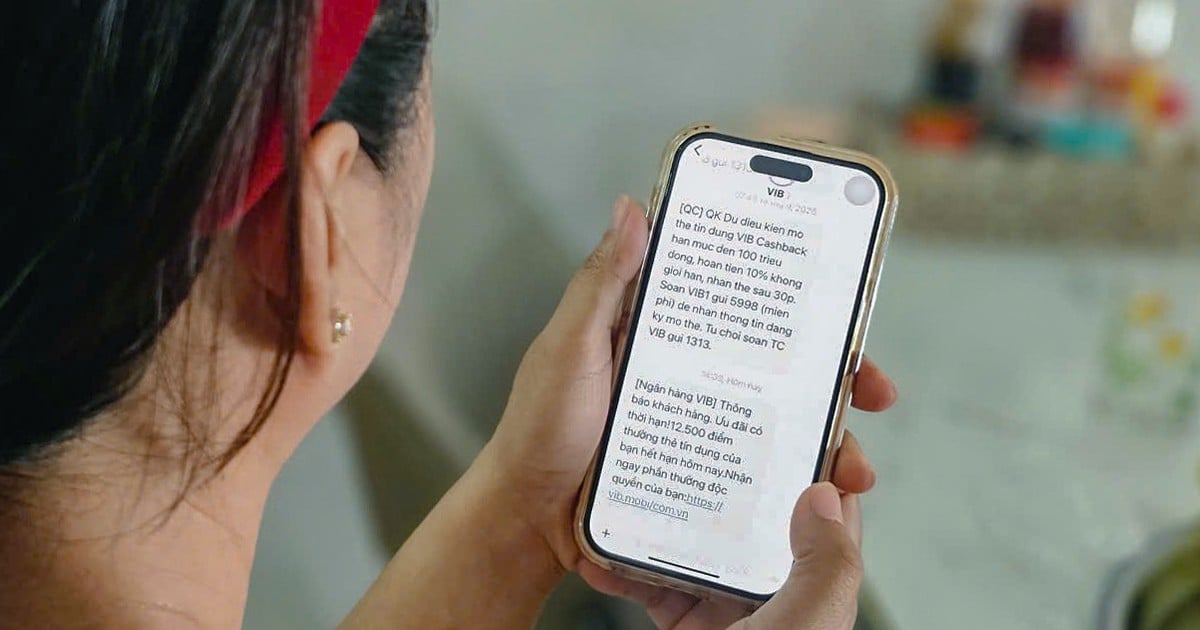

Scams involving sending messages promising commissions or attractive reward points along with links are nothing new. However, thanks to technology, this type of crime has become more sophisticated in order to trap victims.
Users should be wary of messages included in the same conversation thread as their bank’s messages – Photo: XUAN HOAT
In the context of rapidly developing digital technology , cybercrime is becoming increasingly sophisticated. Criminals are constantly changing their methods, employing many new tactics to steal information and seize people’s assets.
One of the emerging scams today is the impersonation of bank branded SMS messages (SMS Brandname), inserting fraudulent messages into the same conversation thread as legitimate messages sent from the bank. This makes it difficult for recipients to distinguish between genuine and fake messages.
According to the head of the Van Hung commune police ( Khanh Hoa province ), recently the unit has recorded cases where people using credit cards received text messages bearing the name of a bank.
Accordingly, this message informed the customer that their 12,500 reward points were about to expire and requested them to access a link to receive the reward. Notably, this fake message appeared within the bank’s previous SMS conversation thread.
This further increases customer trust, raising the risk of users mistakenly believing it to be an official bank announcement.
According to the Van Hung Commune Police, criminals are using devices that mimic mobile base stations (BTS) or other technical methods to spread fake messages impersonating bank brands.
“Due to the mechanism of displaying and sorting messages by sender name on the phone, fraudulent content can appear right in conversations that already contain legitimate bank messages. This is the key point that makes people easily lose vigilance, even if they may have been informed about this scam beforehand,” the leader of Van Hung Commune Police analyzed.
According to the Cyber Security and High-Tech Crime Prevention Department of the Khanh Hoa Provincial Police, with this type of crime, the content of the messages often preys on the psychology of wanting to receive gifts, fear of losing benefits, or concern about account problems. For example, notifications about reward points expiring, unusual account transactions, or requests for information verification…
The message includes a link to a fake website or a page potentially containing malware. When users access and follow the instructions, they may be tricked into providing their login name, password, credit card information, transaction verification code (OTP), or installing a malicious application.
Based on the information obtained, the scam group can attempt to gain control of the device, access bank accounts, and commit acts of property theft.
The Cyber Security and High-Tech Crime Prevention Department of the Khanh Hoa Provincial Police advises: To avoid becoming a victim, people should not place absolute trust in the brand names displayed in received messages.
Here, the message appears in the familiar banking conversation thread that people often use/receive. Although it’s in the same conversation thread as the previous message, this doesn’t mean it’s a legitimate or secure message.
Therefore, the police advise people not to access suspicious links. Be especially wary of messages notifying you of gifts, reward points about to expire, winning prizes, or requests to verify your account that include strange links.
At the same time, absolutely do not disclose your bank password, OTP code, PIN, card information, and other authentication data to others or on unverified websites.
When needing to verify transactions, reward points, or account status, people should access their officially installed banking application (mobile banking app); manually enter the bank’s website address; or contact the call center via the phone number published on official channels.
In case of accidentally accessing suspicious links or providing confidential information, users should quickly contact their bank to request account blocking or protection; and change login information using a secure device if necessary.
If you detect any unusual transactions or misappropriation of assets, you should promptly report it to the police so they can receive your report and guide you on how to handle it.
According to Circular 50/2024/TT-NHNN, banks are prohibited from sending SMS messages or emails containing links to websites to customers, except at the customer’s request.
DEPARTMENT OF GRASSROOT INFORMATION AND FOREIGN INFORMATION
MINISTRY OF CULTURE, SPORTS AND TOURISM
Responsible for content
Mr. Pham Anh Tuan
Head office