Your source for technology news, insights, and analysis. Covering AI, startups, cybersecurity, and innovation.
Get the latest tech updates delivered to your inbox.
© 2026 The Tech Buzz. All rights reserved.
AI Agents Invade Your Text Messages as Conversational AI Goes Mobile
New wave of AI agents designed for SMS and messaging apps transforms how we interact
PUBLISHED: Sat, Oct 3, 2026, 2:06 PM UTC | UPDATED: Sat, Oct 3, 2026, 2:06 PM UTC
The Tech Buzz may earn a commission when you buy through links on this page. This never affects which products we recommend or what we say about them. As an Amazon Associate we earn from qualifying purchases.
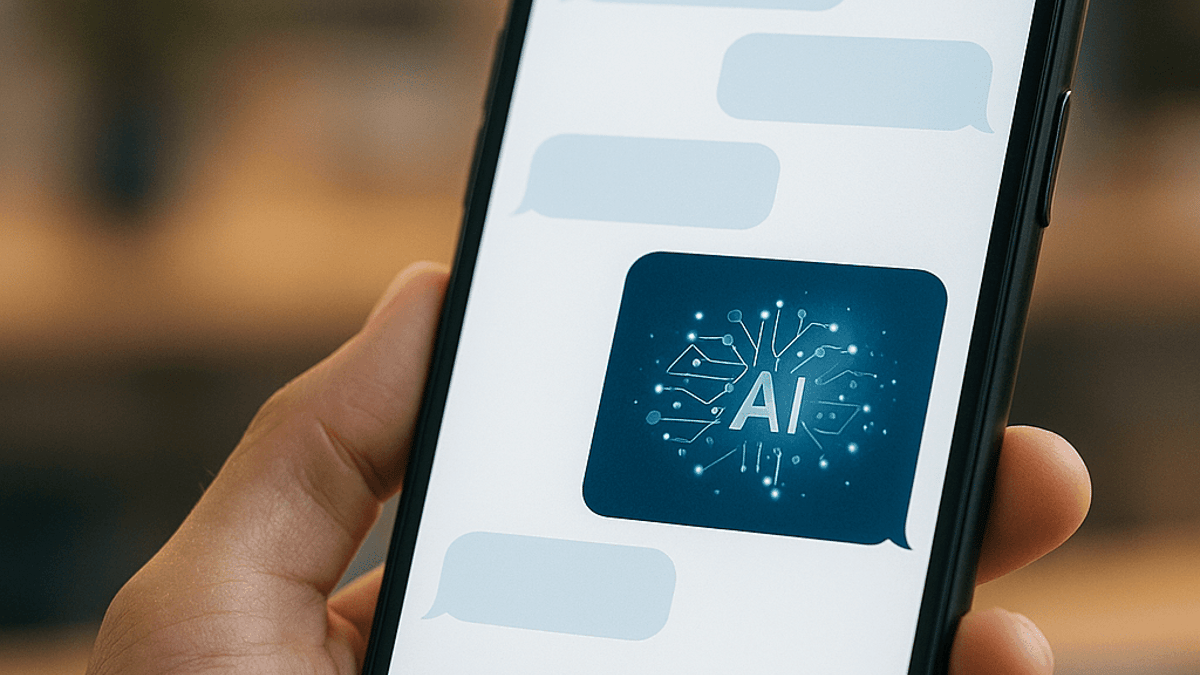
The AI revolution is moving beyond chatbots and into your text messages. A growing ecosystem of AI agents now lives directly in SMS and messaging platforms, offering everything from general assistance to specialized help for families, travel planning, and workplace productivity. This shift represents a major evolution in how we interact with artificial intelligence – making it as simple as sending a text.
The latest frontier in AI isn't happening in fancy apps or desktop software – it's taking place in the most basic communication tool we all use: text messages. A new generation of AI agents is embedding directly into SMS and popular messaging platforms, transforming how millions of people access artificial intelligence.
Unlike traditional AI assistants that require dedicated apps or specific devices, these text-based agents work with any phone capable of sending messages. Users simply text a number or add a contact, then start conversing with AI systems designed for specific tasks and contexts.
The approach tackles one of AI's biggest adoption challenges: friction. While OpenAI's ChatGPT and similar tools have gained massive attention, many users still find them intimidating or forget to use them regularly. Text-based AI agents eliminate these barriers by meeting users where they already spend significant time.
Advertisement
Family-focused agents lead this emerging category, helping parents coordinate schedules, track activities, and manage household tasks through group chats. Travel agents powered by AI can handle booking research, itinerary planning, and real-time trip updates via simple text exchanges. Workplace productivity agents integrate with team messaging to automate routine tasks and provide quick information lookups.
The technology leverages advances in large language models while working within the constraints of text messaging. These agents must communicate clearly in short bursts, handle context switching between different conversation threads, and maintain personality consistency across extended interactions.
Several startups are betting big on this messaging-first approach to AI deployment. The strategy particularly appeals to users who prefer familiar interfaces over learning new applications. It also opens AI access to demographics that might otherwise avoid more complex AI tools.
Advertisement
Major messaging platforms are taking notice. The integration possibilities extend beyond simple SMS to include WhatsApp, Telegram, and other popular messaging services where users already manage personal and professional communications.
The shift reflects broader changes in how people expect to interact with technology. Rather than downloading specific apps for every function, users increasingly prefer services that integrate into existing workflows and communication patterns.
Security and privacy considerations remain paramount as these services handle sensitive personal and professional information through messaging channels. Leading providers are implementing end-to-end encryption and strict data handling policies to address these concerns.
Advertisement
The messaging-based AI trend also highlights the ongoing evolution of conversational interfaces. While voice assistants like Amazon's Alexa dominated earlier AI adoption waves, text-based interactions offer advantages in privacy, context retention, and multi-tasking scenarios.
The emergence of AI agents in text messaging represents a significant shift toward more accessible and integrated artificial intelligence. By removing the friction of separate apps and complex interfaces, these services could accelerate mainstream AI adoption while fundamentally changing how we think about digital assistance. As the technology matures, expect messaging-based AI to become as common as sending a regular text – and potentially much more powerful.
Advertisement
Advertisement
Oct 3
Oct 3
Oct 2
Oct 2
Oct 2
Oct 2

AI Agents Invade Your Text Messages as Conversational AI Goes Mobile – The Tech Buzz