
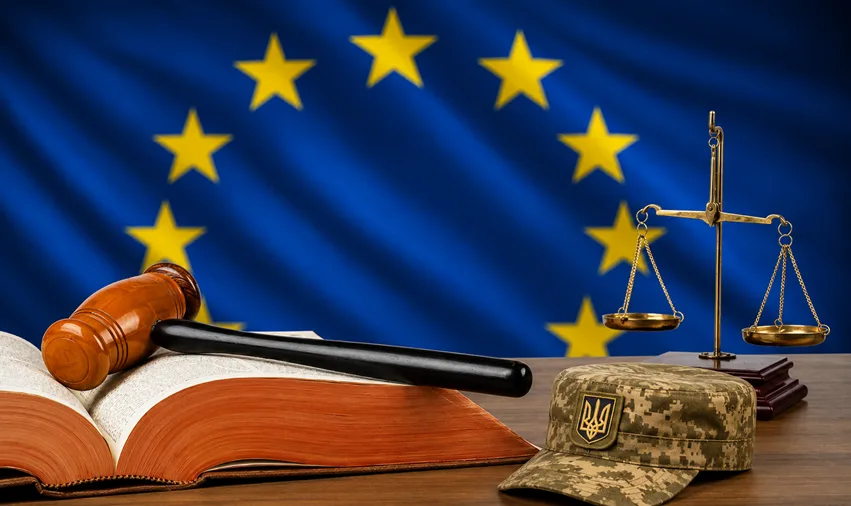

The father of a deceased serviceman appealed to the European Court of Human Rights (ECHR) after his son’s death. In March 2014, the 26-year-old was conscripted for military service during a special mobilisation. He was married with two children and worked in vehicle repair.
Only the latest: read SUD.UA on Telegram
According to his father, the serviceman had planned to finish his service soon and return home, showing no signs of depression. After returning to his military unit from a combat zone, he called his father, stating he was very tired. This was their last conversation.
The official account states that after playing dominoes, the serviceman left the dugout. A few minutes later, his comrades heard a gunshot near his truck. He was found in the cabin with a through gunshot wound to the head. Though still alive, he died en route to the hospital. His father claims the serviceman was taken to a medical facility 64 km from the unit, despite another hospital being only 14 km away.
Two Investigations and Lost Evidence
Following the serviceman’s death, two criminal investigations were launched: one into a possible death due to a violation of firearm handling rules, and the other into a possible murder by unidentified persons.
However, the ECHR found that the two investigative bodies failed to coordinate their efforts.
One set of proceedings was terminated in April 2015. The other was suspended multiple times in 2015 and 2016, but these decisions were subsequently overturned as illegal and unfounded. The investigation ultimately spanned almost ten years.
During this period, crucial evidence was lost or destroyed.
Specifically, a bone fragment and a cartridge case recovered at the scene were lost, and their seizure was not properly documented. Blood samples and histological materials from the initial forensic examination were destroyed before the investigator of the other proceeding requested them. Swabs from the deceased’s hands, held by the investigative authorities, were only submitted for examination in 2019 or 2020. Experts found no traces of gunpowder or explosives on them. The truck in which the serviceman was found, along with the weapon, was returned to the military unit shortly after the incident without a full set of forensic examinations. Additional examinations were only conducted several years later.
The ECHR also highlighted the handling of the deceased’s mobile phone. It was first examined more than a year after his death, having been stored unsealed until then.
In 2020, the mobile operator reported that seven SMS messages were sent from the serviceman’s phone to one number on the day of his death. However, the investigator only requested to retrieve their content in February 2024. By that time, the operator was no longer able to provide the information.
The woman who owned that number was questioned only in March 2024. She confirmed communicating with the serviceman shortly before his death but could not recall the content of the messages.
A significant question in the case was whether the serviceman could have shot himself.
The ECHR noted that several forensic examinations and investigative experiments failed to provide a definitive answer to this question. Experts considered the serviceman’s height, the characteristics and direction of the wound, the possible shooting distance, the position of the body and weapon, and other evidence.
However, the expert commission consistently stated that the question of whether the deceased could have shot himself under the specific circumstances was beyond its competence. According to the experts, the investigator should have drawn a conclusion based on the totality of all case materials. The post-mortem forensic psychiatric examination was conducted only on 27 November 2024. In the questions posed to the experts, suicide was indicated as an established fact. The experts concluded that the serviceman had no mental disorders and could control his actions.
What the ECHR Established
The ECHR observed that the investigation into the serviceman’s death lasted over nine and a half years and still lacked a final conclusion.
The Court emphasised that excessive length of proceedings may itself indicate a flawed investigation, constituting a violation of the state’s positive obligations under Article 2 of the Convention. The Government failed to provide convincing reasons to justify such a delay. Meanwhile, the case materials showed that the primary reasons for the delay were excessive procrastination by authorities and a clear lack of proper competence and diligence.
The Court noted that crucial investigative actions, such as the analysis of digital evidence from the deceased’s phone and the post-mortem forensic psychiatric examination, were only carried out approximately nine years after the serviceman’s death.
The ECHR stressed that the passage of time inevitably diminishes the quantity and quality of evidence and can jeopardise the possibility of a successful investigation. In this case, problems were exacerbated by numerous previous omissions, some of which were already difficult or impossible to remedy.
The Court concluded that Ukraine failed to conduct an effective investigation into the serviceman’s death, which constituted a violation of Article 2 of the Convention in its procedural aspect.
Ukraine Did Not Convincingly Prove the Cause of the Serviceman’s Death
The Court noted that the national investigation never established the final cause of P.S.’s death. However, the wording of questions during the post-mortem psychiatric examination indicated that the investigative authorities effectively favoured the suicide version. Due to serious shortcomings in the investigation, the ECHR could not consider its conclusions reliable, nor the explanation of death convincing and satisfactory.
According to the Court, the authorities failed to provide a satisfactory and convincing explanation for the death of the serviceman, who was under state control during his service.
Therefore, the ECHR found a violation of Article 2 of the Convention in its substantive aspect.
The ECHR also awarded the deceased’s father €20,000 in moral damages, €650 for legal costs incurred in national courts, and €2,000 for costs related to proceedings before the ECHR.
Subscribe to our Telegram channel t.me/sudua, follow SUD.UA on Google News , and join us on VIBER, WhatsApp, Facebook and on Instagram to stay informed about the important events.
© 2010-2026 “Judicial and Legal Newspaper”. All rights reserved. Use of site materials only when hyperlinking to “Judicial and Legal Newspaper” is no lower than the first paragraph. Reprinting, copying or reproduction of the content of the author’s materials of “Judicial and Legal Newspaper” without reference to SUD.UA in any form is strictly prohibited. The media identifier is R40-02154.
Judicial and Legal Newspaper
Editorial address: 01001, Kyiv, Tarasa Shevchenko Boulevard, 1
Tel.: (044) 235-91-41
E-mail for contacting the editorial office: [email protected]
Receipt of press releases and advertising proposals: [email protected]