News Karnataka © 2012 – 2025
All Rights Reserved by Spearhead Media Pvt Ltd
Powered by Quick Advisory & Digital
New Delhi: If you recently received a loud, flashing alert message on your mobile phone from the National Disaster Management Authority, there is no cause for concern. The government has begun pan-India testing of a new Cell Broadcast Alert system designed to improve emergency communication during disasters.
The test messages, sent across various regions, are part of a preparedness exercise to ensure that critical warnings can reach citizens instantly when needed.
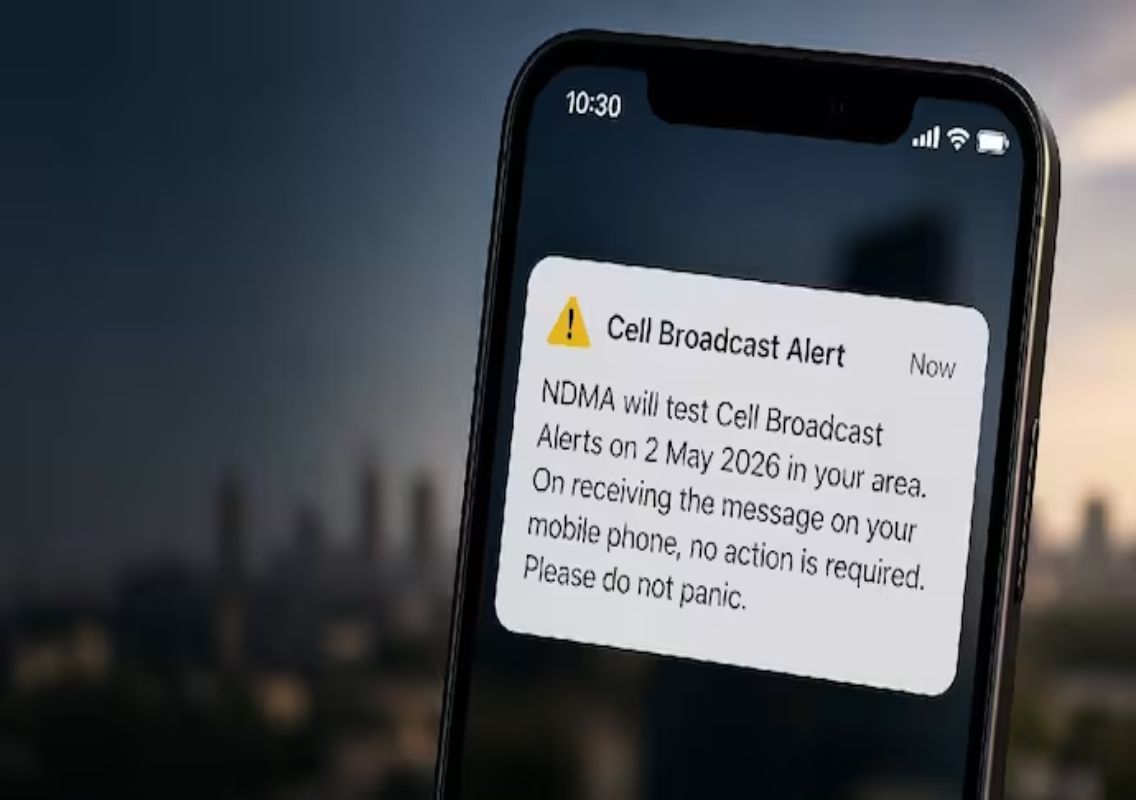
One of the messages being circulated reads: “NDMA will test Cell Broadcast Alerts on 2 May 2026 in your area. On receiving the message on your mobile phone, no action is required. Please do not panic.”
These alerts are intentionally designed to grab attention, often accompanied by a loud alarm tone and a pop-up notification on the screen. The aim is to simulate real emergency conditions and evaluate how effectively such alerts can be delivered.
Authorities have clarified that these are only test messages and do not indicate any real threat or emergency.
The Cell Broadcast Alert system is an indigenous technology being developed to send emergency notifications directly to mobile phones in specific geographic areas.
Unlike regular SMS messages, cell broadcast alerts do not depend on individual phone numbers. Instead, they are transmitted through mobile towers, allowing authorities to instantly reach a large number of users within a targeted region.
This makes the system especially useful during disasters such as earthquakes, tsunamis, lightning strikes, floods, or even man-made emergencies like gas leaks or chemical hazards.
The testing exercise is being conducted to assess the reliability, speed, and reach of the system before it is officially rolled out nationwide.
Officials want to ensure that the entire mobile network infrastructure can handle such alerts without delays or technical glitches during real emergencies. Previous limited tests have already been conducted, and the current phase expands the exercise across the country.
The initiative is part of India’s broader strategy to strengthen disaster preparedness and response mechanisms.
The alerts are being sent by the National Disaster Management Authority, which is the apex body responsible for disaster management in the country.
The system itself is powered by the Integrated Alert System known as SACHET, developed by the Centre for Development of Telematics.
It is based on the Common Alerting Protocol (CAP), a globally recognised standard recommended by the International Telecommunication Union for emergency communications.
Test alerts will only be received on mobile phones where the Cell Broadcast test channels are enabled. Users can choose to enable or disable such alerts through their phone settings:
However, once the system is fully implemented, emergency alerts are expected to be delivered across all compatible devices, regardless of test settings, to ensure maximum reach.
During an actual emergency, the system will send location-specific warnings with clear instructions. These alerts are designed to be immediate and difficult to ignore, helping people take timely action to stay safe.
The use of multiple Indian languages will further ensure that messages are understood by a wider population.
After the completion of testing, the government plans to operationalise the system across India. Once fully deployed, it will become a key tool in disseminating critical information during emergencies.
By leveraging mobile technology, authorities aim to reduce response time and improve public safety during natural and man-made disasters.
The NDMA alert SMS currently being received by users is part of a planned nationwide test and not a real emergency. The initiative reflects India’s efforts to build a robust and responsive disaster warning system.
As testing continues, the system is expected to play a crucial role in safeguarding lives by delivering timely alerts when it matters most.
21 April 2026
30 April 2026

NDMA alert SMS explained: India testing system – newskarnataka.com